

COMPLIMENTARY WORLDWIDE SHIPPING

Photography by Lebond.
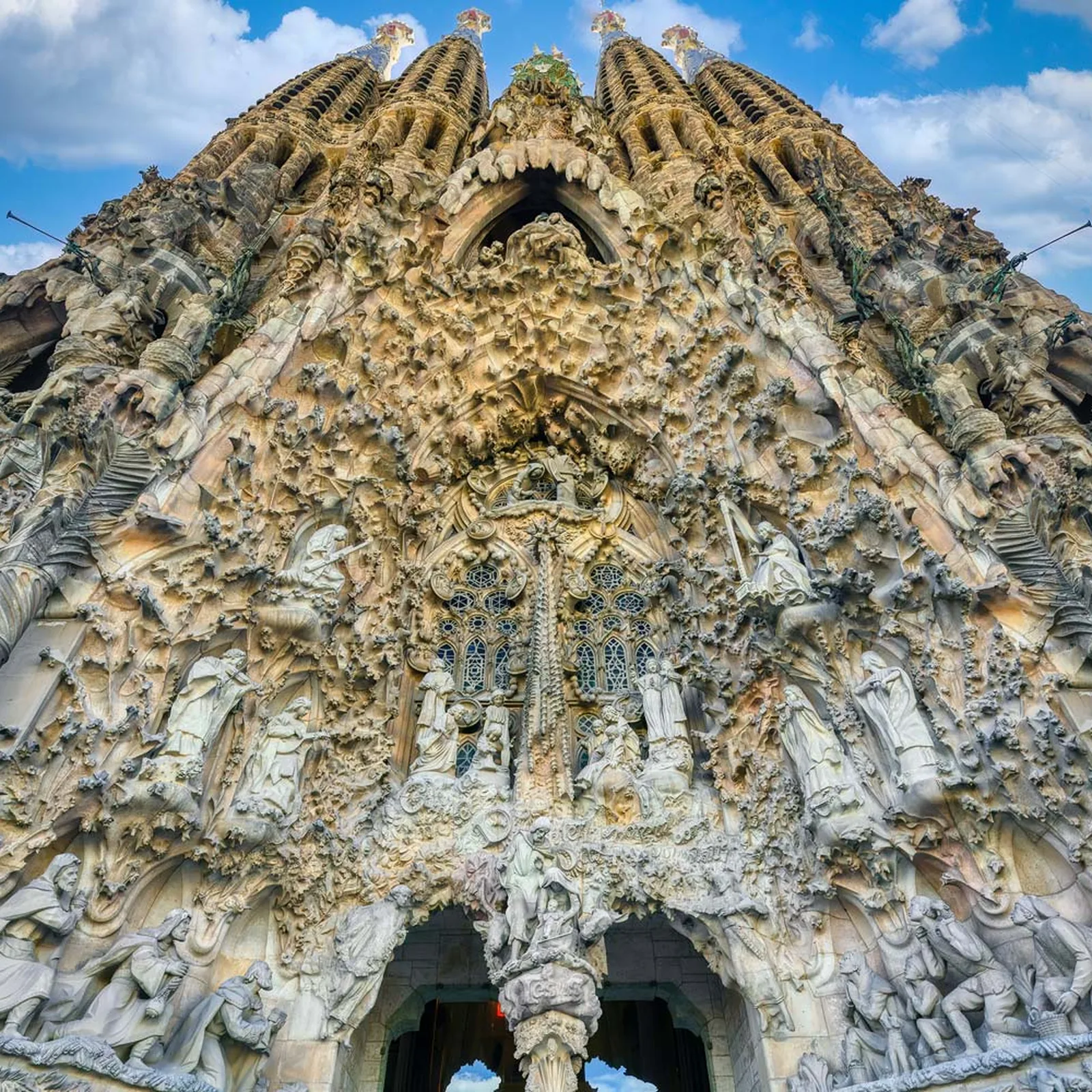
Antoni Gaudí’s Sagrada Família is the basilica the Catalan architect spent the last 43 years of his life shaping, and 2026 marks a century since his death in 1926. Still rising over Barcelona, it is architecture conceived as a living organism in stone, an idea of building that the Lebond Attraction carries, at the scale of the wrist, into the present.
Antoni Gaudí’s Sagrada Família is a large unfinished Roman Catholic basilica in Barcelona, begun in 1882 and designed for most of its life by Gaudí. Conceived as an expiatory temple funded entirely by private donations, it was intended as a synthesis of everything Gaudí knew: structure, geometry, faith and the forms of the natural world. When he took charge in 1883, at the age of 31, he set aside the neo-Gothic plans he had inherited and began to reimagine the building from the ground up. He would work on almost nothing else for the rest of his career.
Work on the Sagrada Família has continued for more than 140 years, making it one of the longest running building projects in the modern world. Gaudí knew he would never see it finished. At his death in 1926, struck by a tram and buried in the basilica’s own crypt, less than a quarter of the structure stood complete, essentially the crypt and the Nativity facade. Progress since has depended on interpreting his surviving models and drawings, many of them damaged when the workshop was set alight during the Spanish Civil War in 1936.
“My client is not in a hurry,” Gaudí is said to have remarked of the temple’s slow rise.
| Milestone | Year |
|---|---|
| Construction begins | 1882 |
| Gaudí takes charge | 1883 |
| Death of Gaudí | 1926 |
| Nativity facade and crypt, UNESCO listed | 2005 |
| Consecrated a basilica (Benedict XVI) | 2010 |
| Tower of the Virgin Mary completed | 2021 |
| Centenary of Gaudí’s death | 2026 |
Two landmarks measure the modern effort. In 2005 the Nativity facade and the crypt were inscribed on the UNESCO World Heritage list as part of the Works of Antoni Gaudí, and in 2010 Pope Benedict XVI consecrated the building as a basilica, allowing worship beneath a nave Gaudí had drawn but never seen roofed.
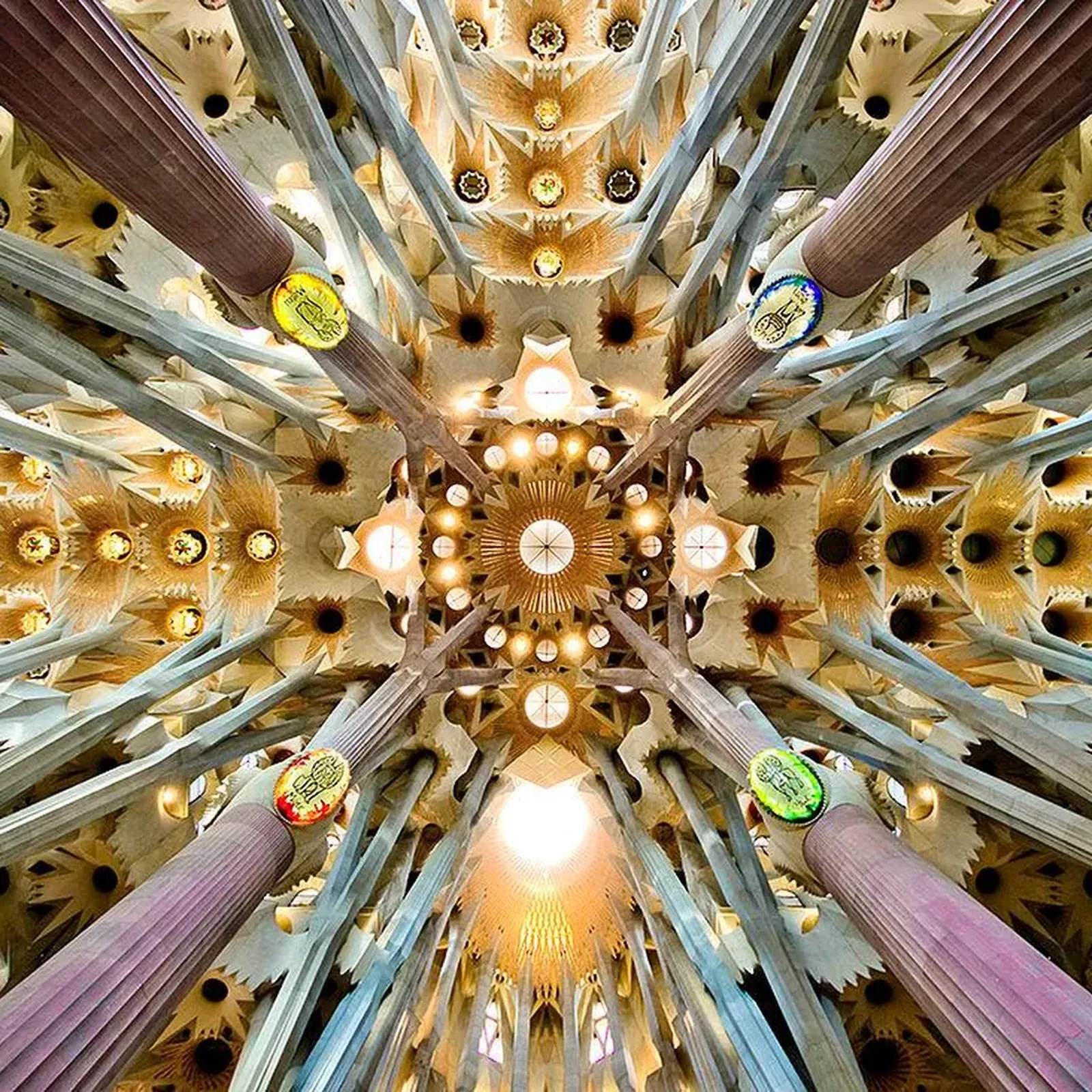
Gaudí based the Sagrada Família on the geometry of nature rather than the straight lines of classical architecture. Branching columns open like a stone forest to carry the vaults, and the surfaces are built from hyperboloids, helicoids and paraboloids, ruled shapes that are structurally efficient and buildable in stone. To find the ideal line of thrust for his arches he hung weighted strings from the ceiling, a catenary model whose mirror image gave him the load-bearing curves below. The result is a building that feels grown rather than assembled.
The completed design calls for eighteen spires: twelve for the apostles, four for the evangelists, one for the Virgin Mary and, at the centre, the Tower of Jesus Christ rising to 172.5 metres. Gaudí set that height deliberately just below the hill of Montjuïc, on the principle that his work should never rise higher than that of God.
A hundred years after his death, Antoni Gaudí’s Sagrada Família matters because it proves that ambition and patience can outlast a single lifetime. Few buildings ask their makers to work from another’s imagination for generations; fewer still turn that constraint into coherence rather than compromise. The basilica is also a lesson in material honesty, the same value that runs through the best modern design: every curve answers to structure, every ornament grows from the geometry beneath it. It is architecture measured not in years but in centuries, a way of thinking about time that sits close to the heart of what a considered object, worn daily, can represent.
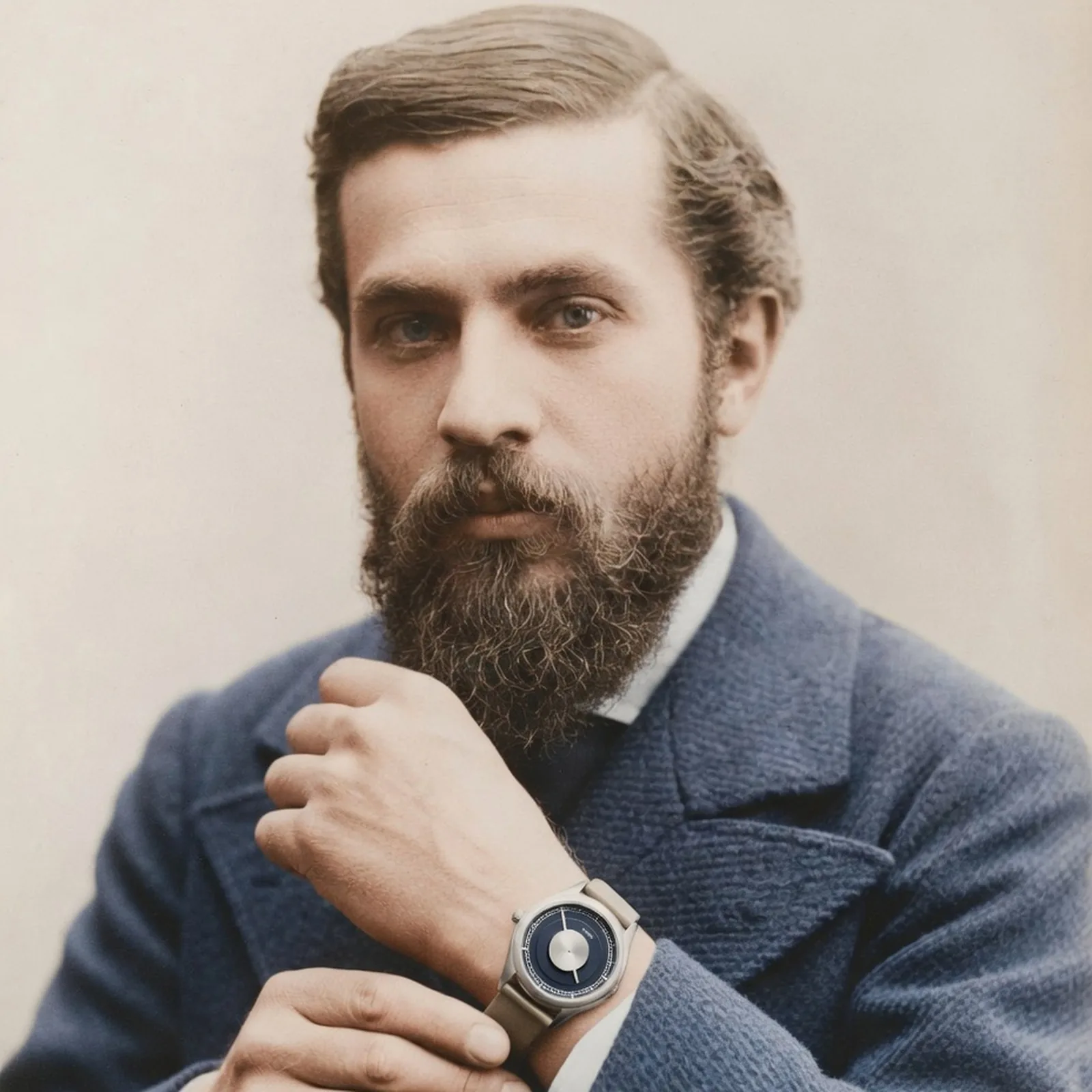
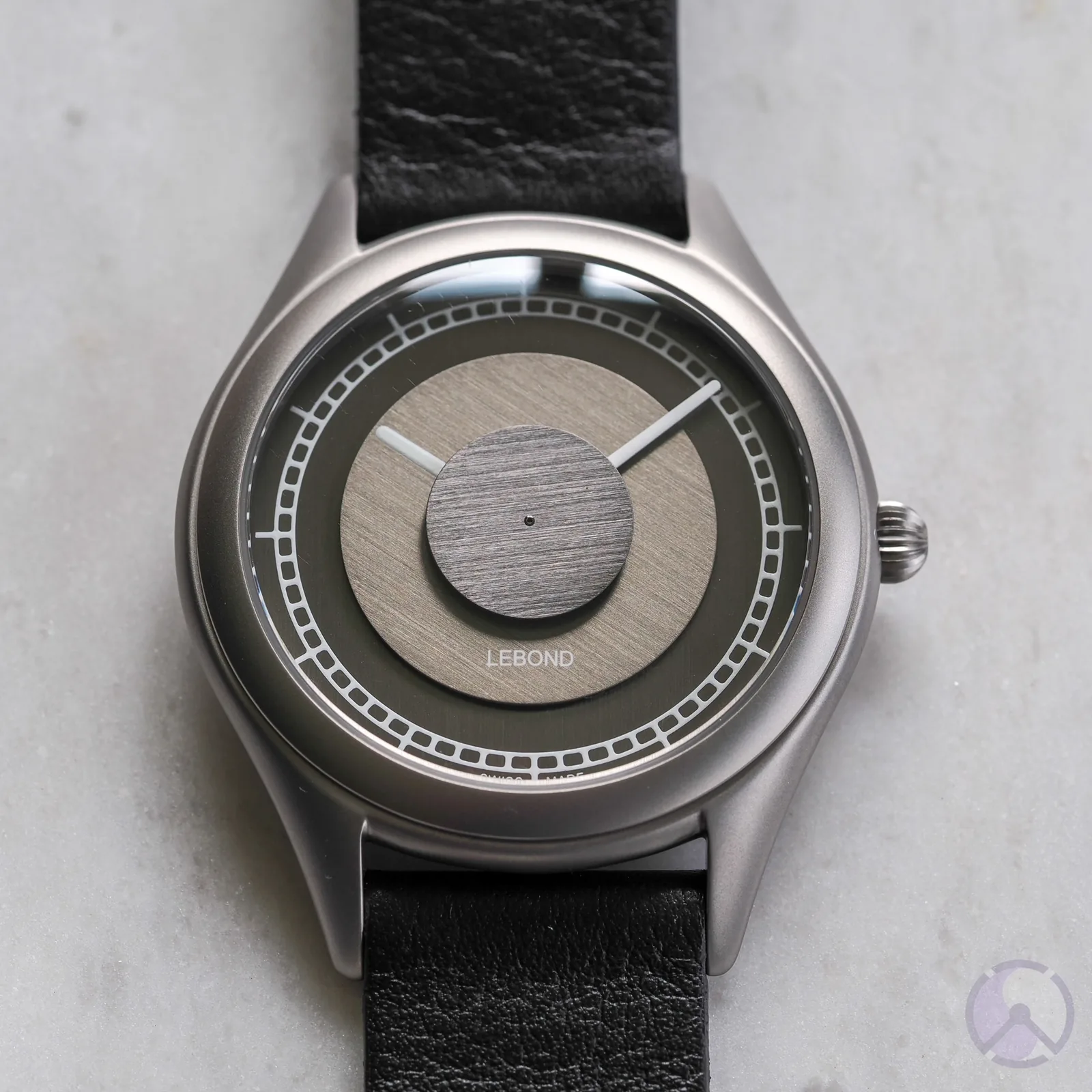
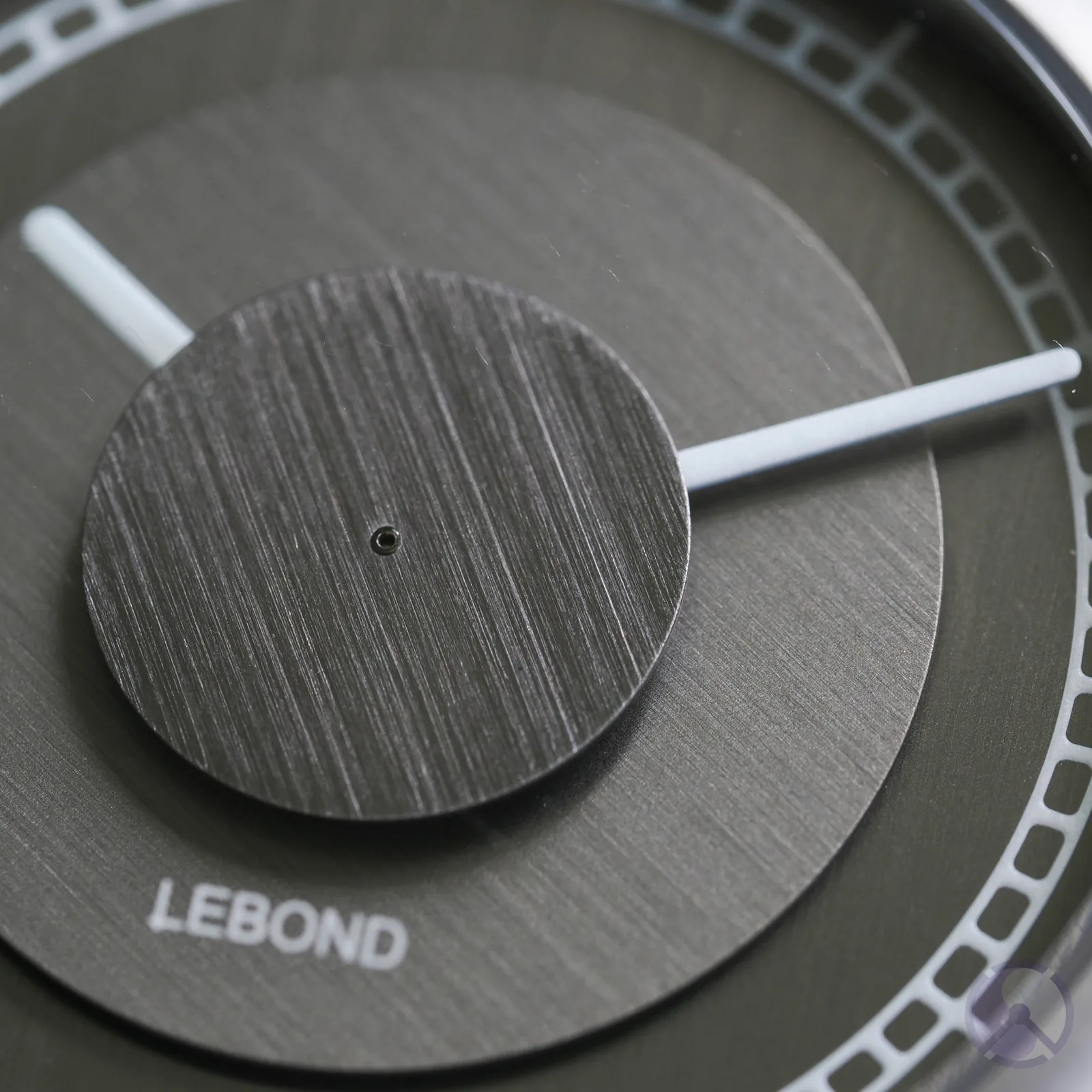
The Lebond Attraction distils Gaudí’s spirit into Swiss titanium, released to mark the centenary of his death in 1926. It takes its name from the Hotel Attraction, the unbuilt New York skyscraper whose clustered cones echoed the very spires of the Sagrada Família. The watch does not copy Gaudí’s ornament; it borrows his conviction that structure and beauty are one thing. See how that idea sits within the wider collection of Lebond watches.
No. The Sagrada Família is still under construction after more than 140 years. The central Tower of Jesus Christ is expected to be completed around the 2026 centenary of Gaudí’s death, with decorative work on the Glory facade and other details continuing afterward.
No. When Gaudí died in 1926, less than a quarter of the basilica was built, chiefly the crypt and the Nativity facade. Everything since has been completed by later architects working from his models and drawings.
The Sagrada Família is an expiatory temple funded only by private donations and ticket sales, so its pace has always followed its finances. Its extraordinary geometric complexity, and the loss of many of Gaudí’s models in a 1936 fire, slowed progress further.
The central Tower of Jesus Christ is designed to reach 172.5 metres, which will make the Sagrada Família the tallest church in the world. Gaudí kept it just below Montjuïc hill, at roughly 177 metres, out of deference.
The Lebond Attraction is a Swiss titanium watch and a tribute to Antoni Gaudí, released to mark the centenary of his death in 1926. It is named after his unbuilt Hotel Attraction, a project born of the same imagination as the Sagrada Família.