

COMPLIMENTARY WORLDWIDE SHIPPING
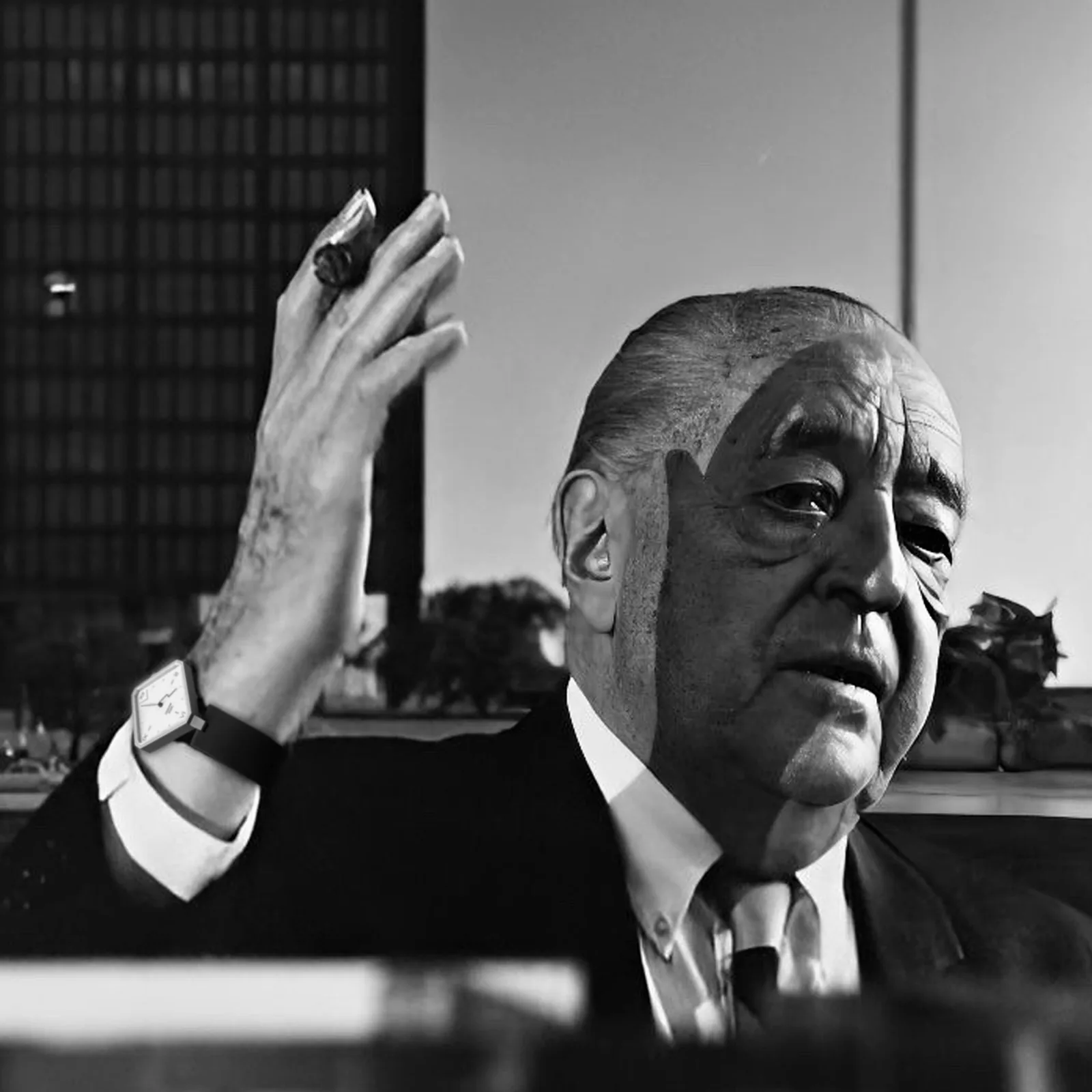
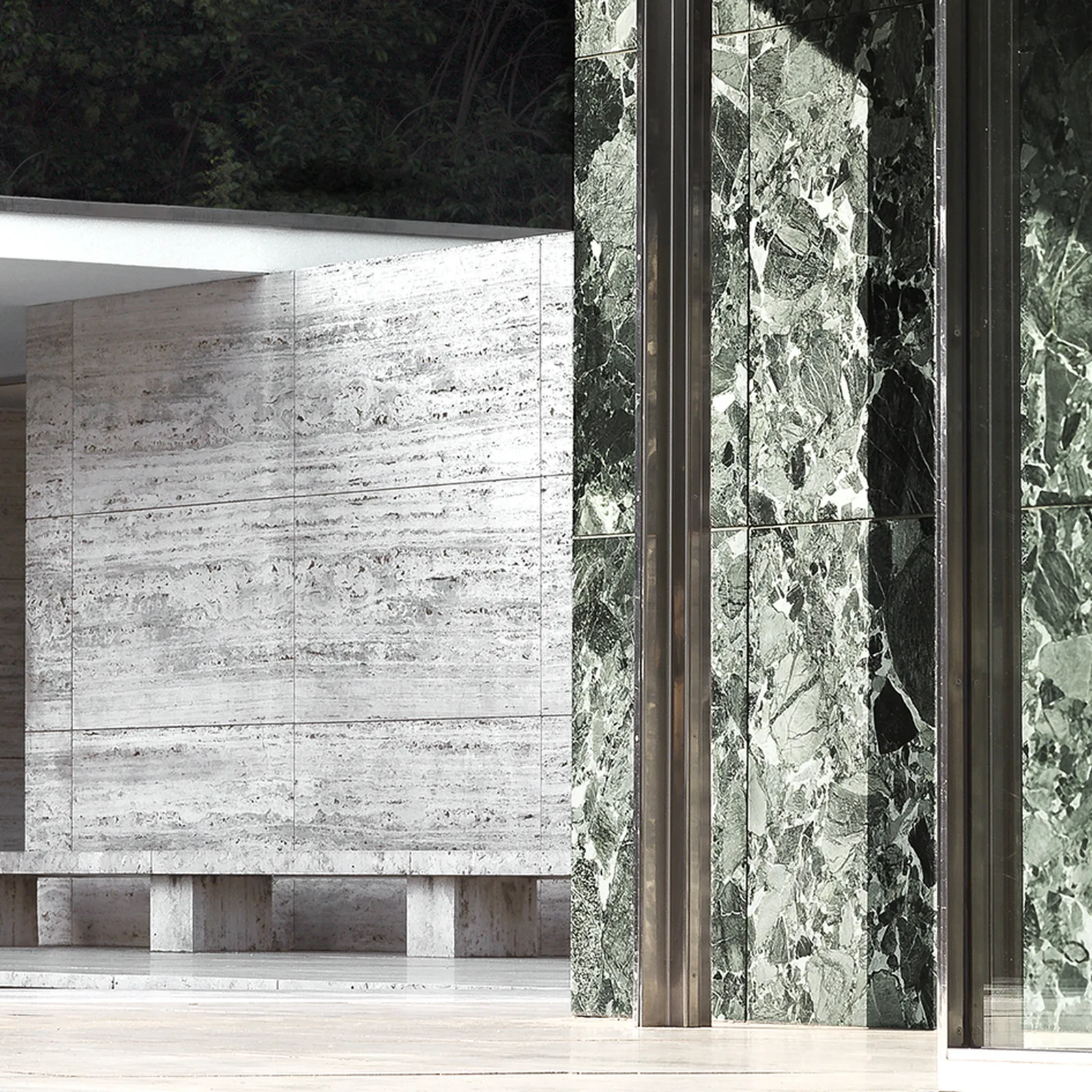

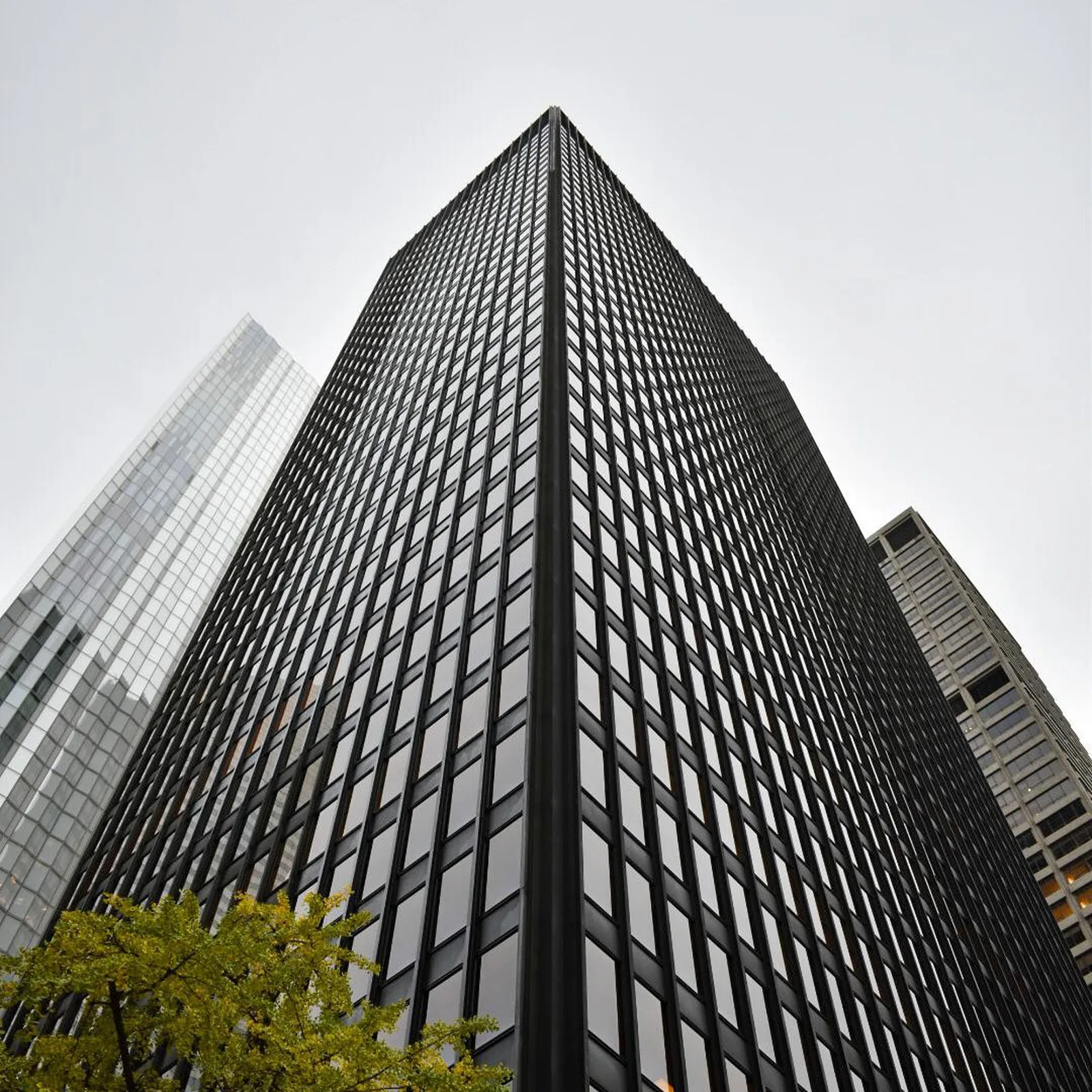
Archive photography. Portrait of Mies van der Rohe and his key buildings.
Few phrases have shaped modern building as quietly as Mies van der Rohe’s “less is more”. The German-American architect turned three words into a discipline, stripping architecture back to structure, proportion and light until nothing remained that could be removed. A century later, that instinct for reduction is the same one a considered watch obeys.
When Mies van der Rohe said “less is more” he meant that clarity and restraint produce greater beauty than ornament and excess. The phrase, which he borrowed from a Robert Browning poem of 1855, became the motto of an architecture reduced to its essentials: exposed steel frames, planes of glass, and space left open and uninterrupted. For Mies the goal was not emptiness but precision, a building so resolved that every element earns its place. His second maxim completes the thought.
“God is in the details,” Mies van der Rohe often said, insisting that reduction demands more care, not less.
Mies developed “less is more” as the last director of the Bauhaus, the German school that fused art, craft and industry between 1919 and 1933. Born in Aachen in 1886, he learned proportion in his father’s stonemasonry workshop before rising through Berlin’s avant-garde. He led the Bauhaus from 1930 until the Nazis forced its closure in 1933, then emigrated to the United States in 1937, where he headed the architecture school at what became the Illinois Institute of Technology in Chicago. There he built a body of work that made reduction into a language others could learn.
Mies proved “less is more” in a handful of buildings that remain touchstones of modern design. Each does more with less, and each reads as clearly today as when it was built.
The shorthand for his method, “skin and bones” architecture, captures it exactly: an honest steel structure wrapped in a taut glass skin, with nothing added to disguise how the building stands.
Not everyone accepted that less is more, and the argument sharpened the idea rather than sinking it. In 1966 the American architect Robert Venturi answered Mies directly with the retort “less is a bore”, launching the postmodern movement and its taste for colour, history and ornament. Venturi had a point: reduction can tip into coldness, and a glass box on the wrong site can feel indifferent to the life around it. Yet the debate proved how much weight Mies’s three words carried. Postmodernism came and went in a generation, while the Barcelona Pavilion and the Seagram Building still look composed and current. Restraint, it turned out, was the harder position to argue with over time, because it left nothing to grow tired of.
Mies van der Rohe’s “less is more” still matters because restraint has proven more durable than fashion. His buildings age slowly precisely because they contain nothing decorative to date them. That lesson traveled well beyond architecture, into product design, typography and horology, wherever makers decided that the strongest gesture is the one held back. It is the thread that connects Mies to the architects behind Lebond, and to a watch such as the Lebond Souto Moura, whose severe, essential dial answers to the same conviction: remove until only the necessary remains. It is minimalism understood not as a style but as a way of thinking, visible across the wider collection of Lebond watches.
Ludwig Mies van der Rohe (1886 to 1969) was a German-American architect and the last director of the Bauhaus. A pioneer of modernism, he is known for steel-and-glass buildings such as the Barcelona Pavilion, the Farnsworth House and the Seagram Building.
No. The phrase “less is more” comes from Robert Browning’s 1855 poem “Andrea del Sarto”, but Mies van der Rohe made it his own, using it to summarise an entire philosophy of architectural restraint.
“Skin and bones” describes Mies van der Rohe’s method of exposing a building’s steel structure, the bones, and wrapping it in a glass skin. Nothing conceals how the building stands, which is the essence of “less is more”.
The Lebond Souto Moura is a Swiss titanium watch designed with Pritzker laureate Eduardo Souto de Moura. Its stripped, essential dial reflects the same reductive discipline that Mies van der Rohe made famous.