

COMPLIMENTARY WORLDWIDE SHIPPING
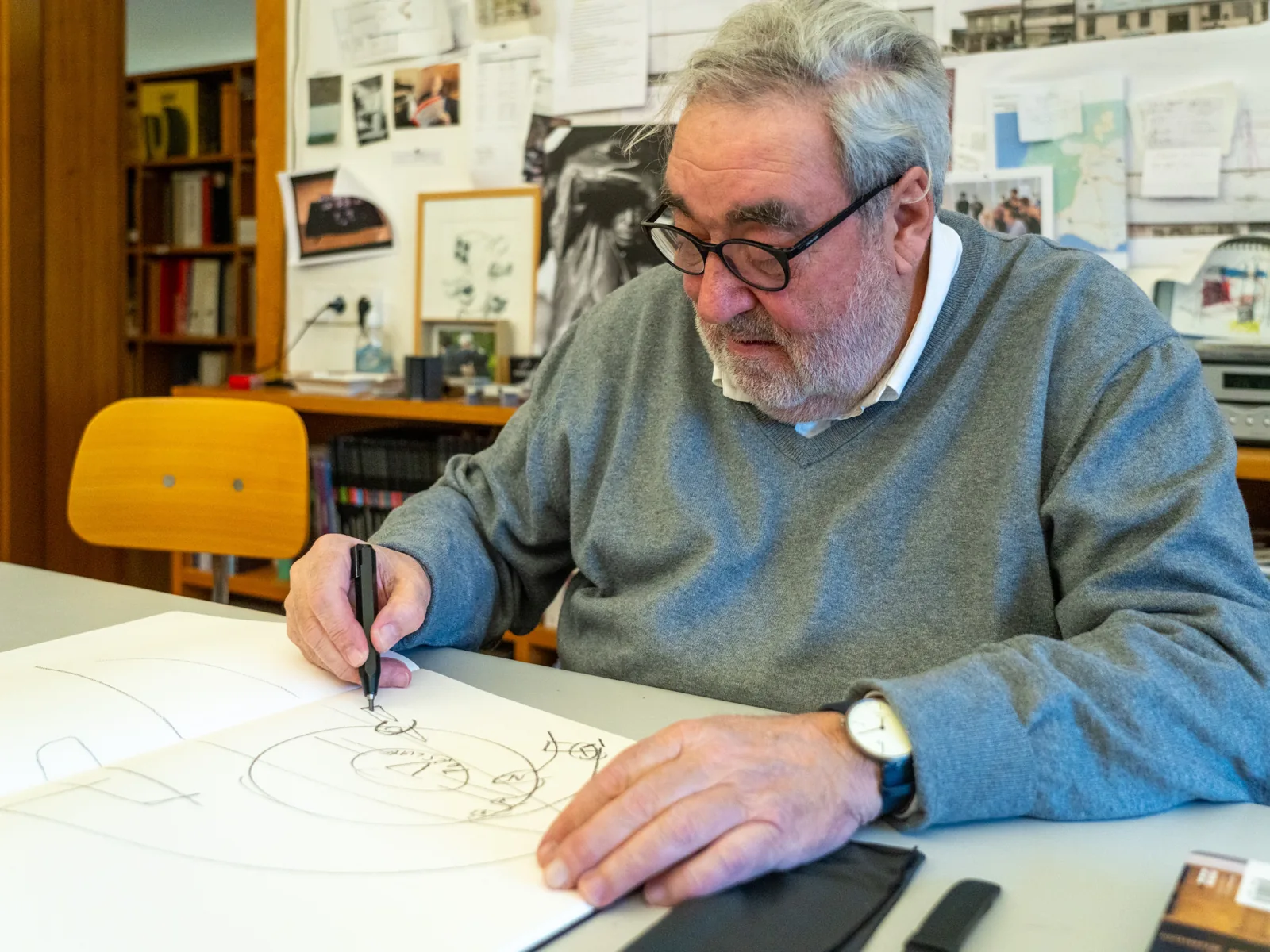
Photography by William Mulvihill
Pritzker Prize winners are the architects judged to have made the most significant contribution to the built environment, the recipients of what is often called the Nobel of architecture. Awarded every year since 1979, the prize has twice gone to the Portuguese masters behind Lebond, Álvaro Siza and Eduardo Souto de Moura.
The Pritzker Architecture Prize is the field’s highest international honour, given annually to a living architect for a body of work of lasting value. It was founded in 1979 by Jay and Cindy Pritzker through their family’s Hyatt Foundation, and the first laureate was the American architect Philip Johnson. Each winner receives a grant and a bronze medallion, and the announcement is followed closely as a barometer of where architecture is heading.
From Philip Johnson in 1979 to the present, the prize has honoured a single living architect almost every year. The complete list of laureates is below.
| Year | Laureate | Country |
|---|---|---|
| 1979 | Philip Johnson | United States |
| 1980 | Luis Barragán | Mexico |
| 1981 | James Stirling | United Kingdom |
| 1982 | Kevin Roche | Ireland |
| 1983 | I. M. Pei | United States |
| 1984 | Richard Meier | United States |
| 1985 | Hans Hollein | Austria |
| 1986 | Gottfried Böhm | Germany |
| 1987 | Kenzo Tange | Japan |
| 1988 | Gordon Bunshaft and Oscar Niemeyer | United States and Brazil |
| 1989 | Frank Gehry | Canada and United States |
| 1990 | Aldo Rossi | Italy |
| 1991 | Robert Venturi | United States |
| 1992 | Álvaro Siza | Portugal |
| 1993 | Fumihiko Maki | Japan |
| 1994 | Christian de Portzamparc | France |
| 1995 | Tadao Ando | Japan |
| 1996 | Rafael Moneo | Spain |
| 1997 | Sverre Fehn | Norway |
| 1998 | Renzo Piano | Italy |
| 1999 | Norman Foster | United Kingdom |
| 2000 | Rem Koolhaas | Netherlands |
| 2001 | Herzog and de Meuron | Switzerland |
| 2002 | Glenn Murcutt | Australia |
| 2003 | Jørn Utzon | Denmark |
| 2004 | Zaha Hadid | United Kingdom |
| 2005 | Thom Mayne | United States |
| 2006 | Paulo Mendes da Rocha | Brazil |
| 2007 | Richard Rogers | United Kingdom |
| 2008 | Jean Nouvel | France |
| 2009 | Peter Zumthor | Switzerland |
| 2010 | Kazuyo Sejima and Ryue Nishizawa | Japan |
| 2011 | Eduardo Souto de Moura | Portugal |
| 2012 | Wang Shu | China |
| 2013 | Toyo Ito | Japan |
| 2014 | Shigeru Ban | Japan |
| 2015 | Frei Otto | Germany |
| 2016 | Alejandro Aravena | Chile |
| 2017 | Aranda, Pigem and Vilalta (RCR) | Spain |
| 2018 | Balkrishna Doshi | India |
| 2019 | Arata Isozaki | Japan |
| 2020 | Farrell and McNamara (Grafton) | Ireland |
| 2021 | Lacaton and Vassal | France |
| 2022 | Francis Kéré | Burkina Faso and Germany |
| 2023 | David Chipperfield | United Kingdom |
| 2024 | Riken Yamamoto | Japan |
| 2025 | Liu Jiakun | China |
| 2026 | Smiljan Radić | Chile |
Each year an international jury, made up of architects, critics, scholars and past laureates, selects a single living architect whose built work shows talent, vision and commitment sustained over time. The prize rewards a body of work rather than one famous building, which is why laureates range from designers of grand civic monuments to architects working quietly with modest budgets and local materials. In recent years the jury has leaned toward social purpose and restraint over spectacle, a shift that says as much about architecture’s priorities as about any individual winner. The announcement each spring is read worldwide as a signal of where the discipline believes its future lies.
Two names on that list are central to this brand. Álvaro Siza, the 1992 laureate, is celebrated for a sculptural poetic modernism, while Eduardo Souto de Moura, the 2011 laureate, refined that language into a cooler, Miesian restraint. Both belong to the Porto School, and both have translated their architecture into Swiss titanium for Lebond, making the brand a rare meeting point between Pritzker-level design and the wrist.
The prize matters because it sets the terms of what good architecture means in a given decade, and those terms ripple outward into design at every scale. The same values the jury rewards, proportion, restraint, honest material and a sensitivity to context, are exactly the ones an architect brings to a watch dial. Seeing them celebrated at the scale of a museum or a stadium makes their appearance on the wrist feel less like novelty and more like continuity. Explore how that thinking looks in titanium across the Lebond collection and meet the brand’s architects.
The Pritzker Architecture Prize is the highest international honour in architecture, awarded each year since 1979 to a living architect for a significant body of work. It is run by the Hyatt Foundation and is often called the Nobel of architecture.
The first Pritzker Prize winner was the American architect Philip Johnson, in 1979, the year the prize was founded by Jay and Cindy Pritzker.
The 2026 Pritzker Prize was awarded to the Chilean architect Smiljan Radić. Recent laureates also include Liu Jiakun (2025), Riken Yamamoto (2024) and David Chipperfield (2023).
Two Portuguese Pritzker laureates design for Lebond: Álvaro Siza (1992) and Eduardo Souto de Moura (2011), each with a watch made in Swiss titanium.