

COMPLIMENTARY WORLDWIDE SHIPPING
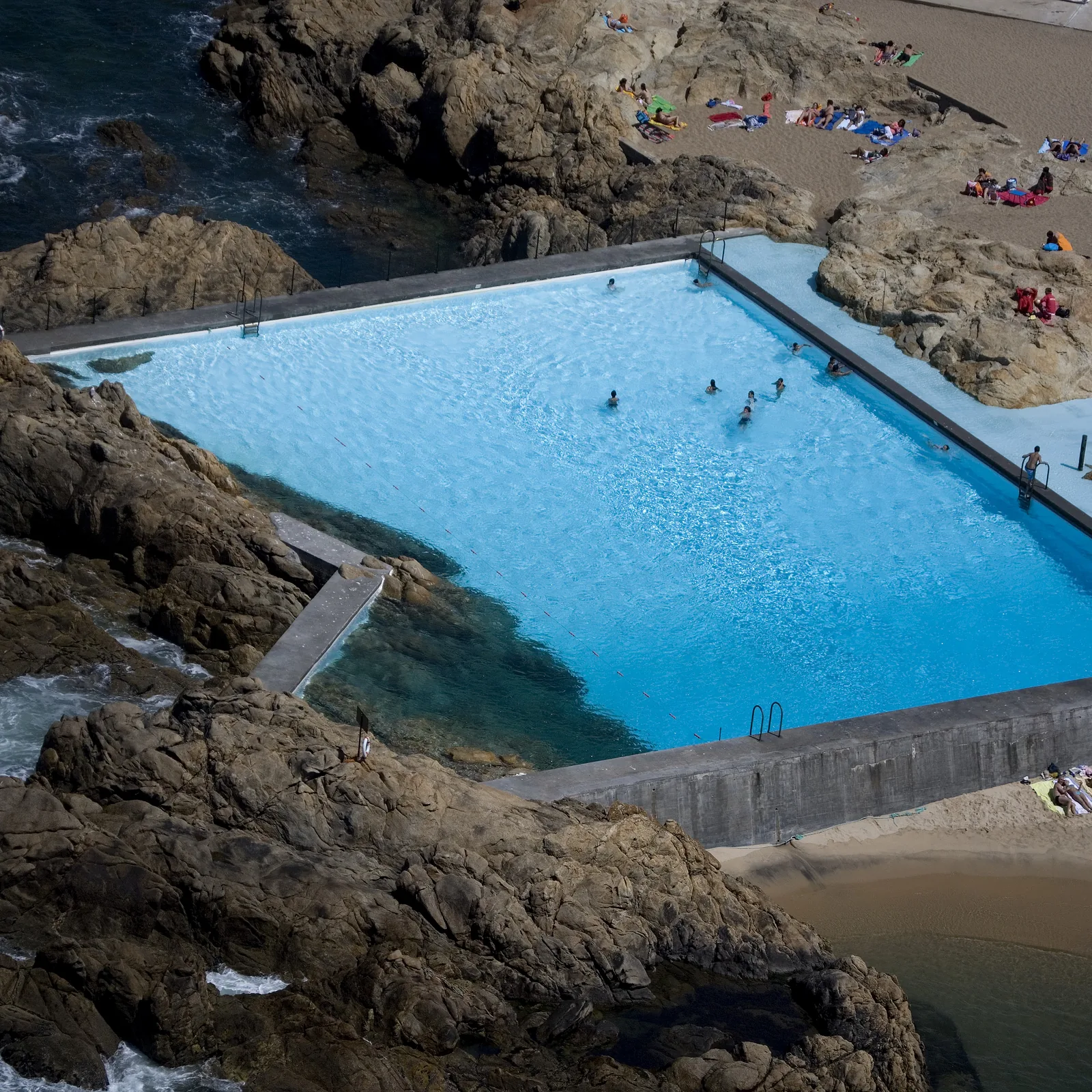
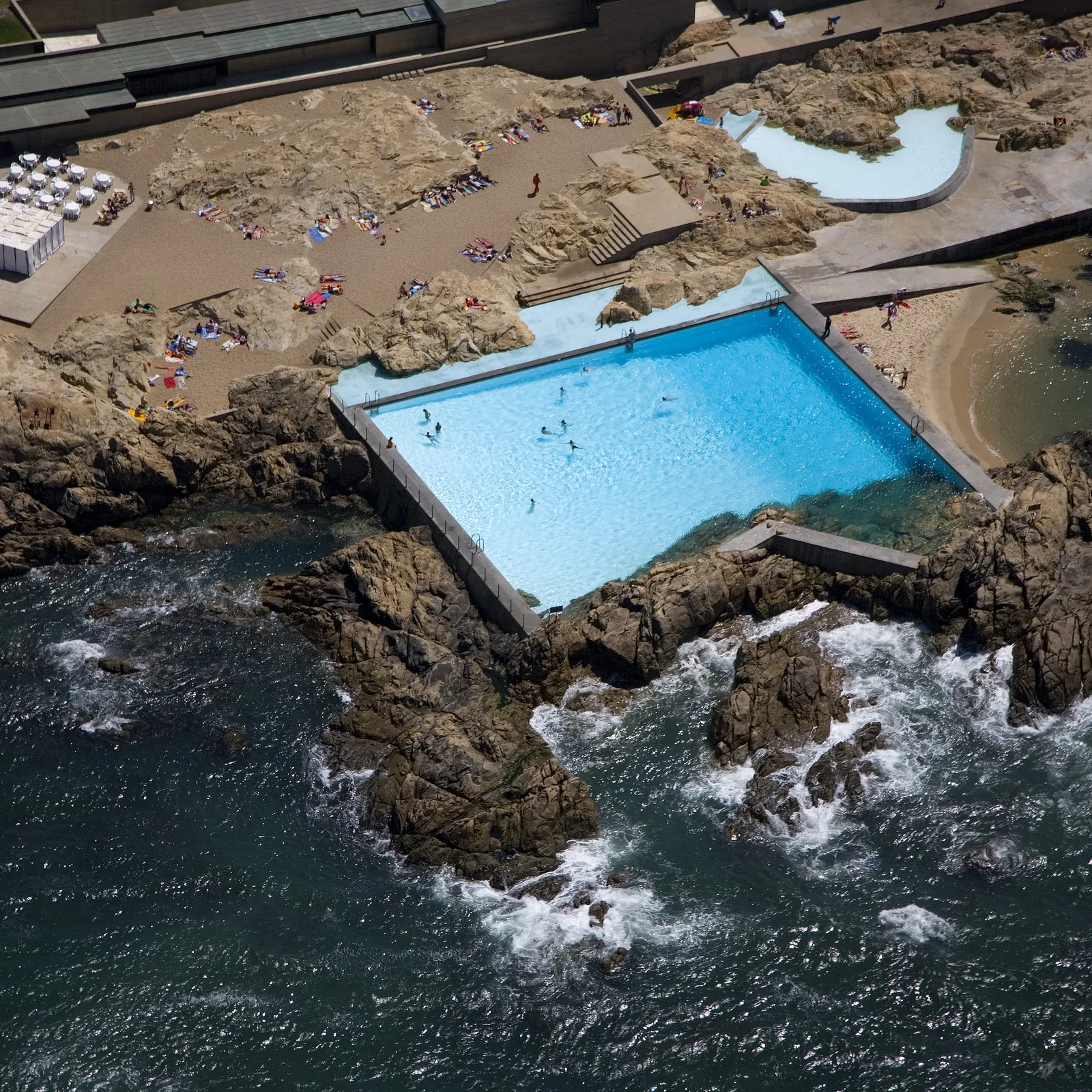
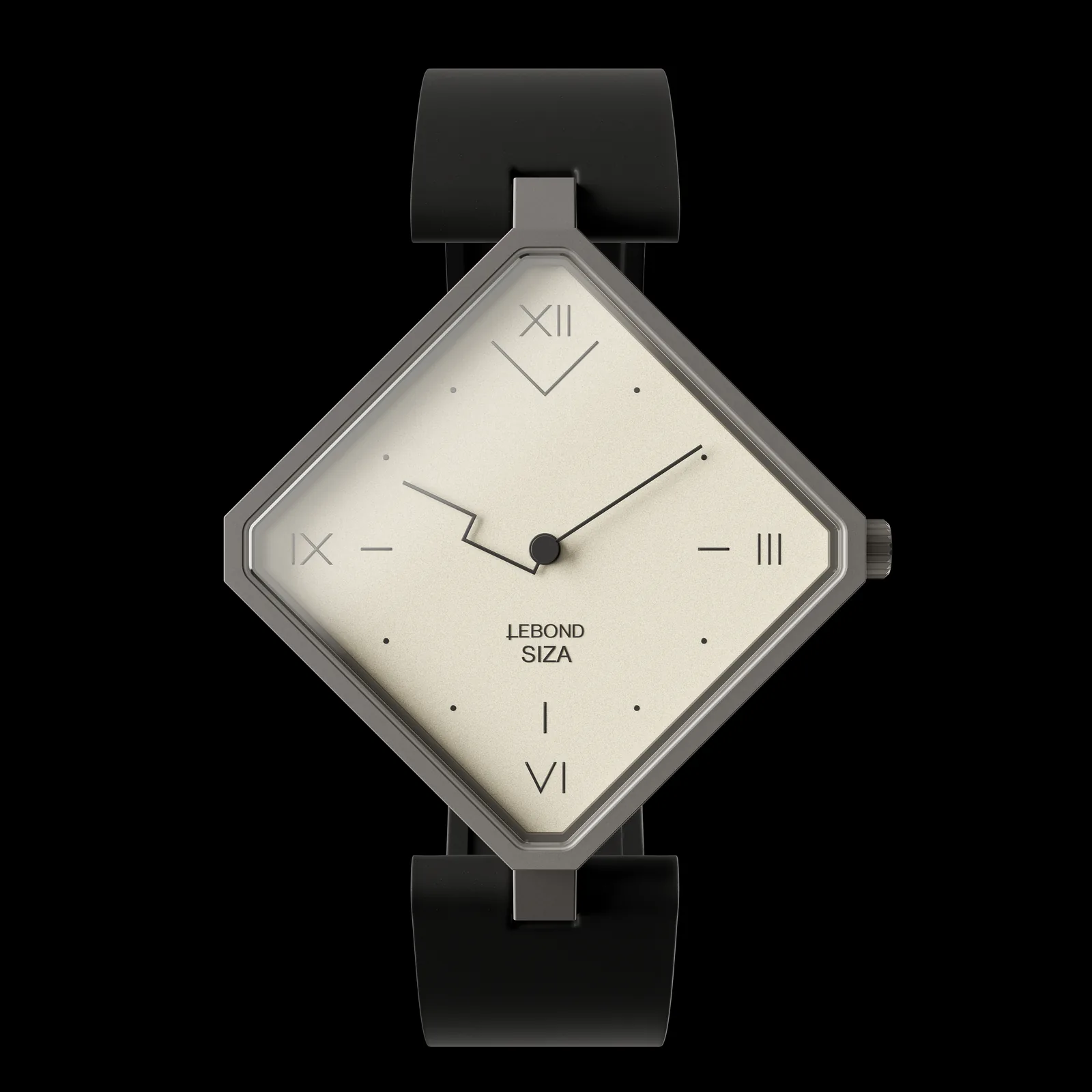
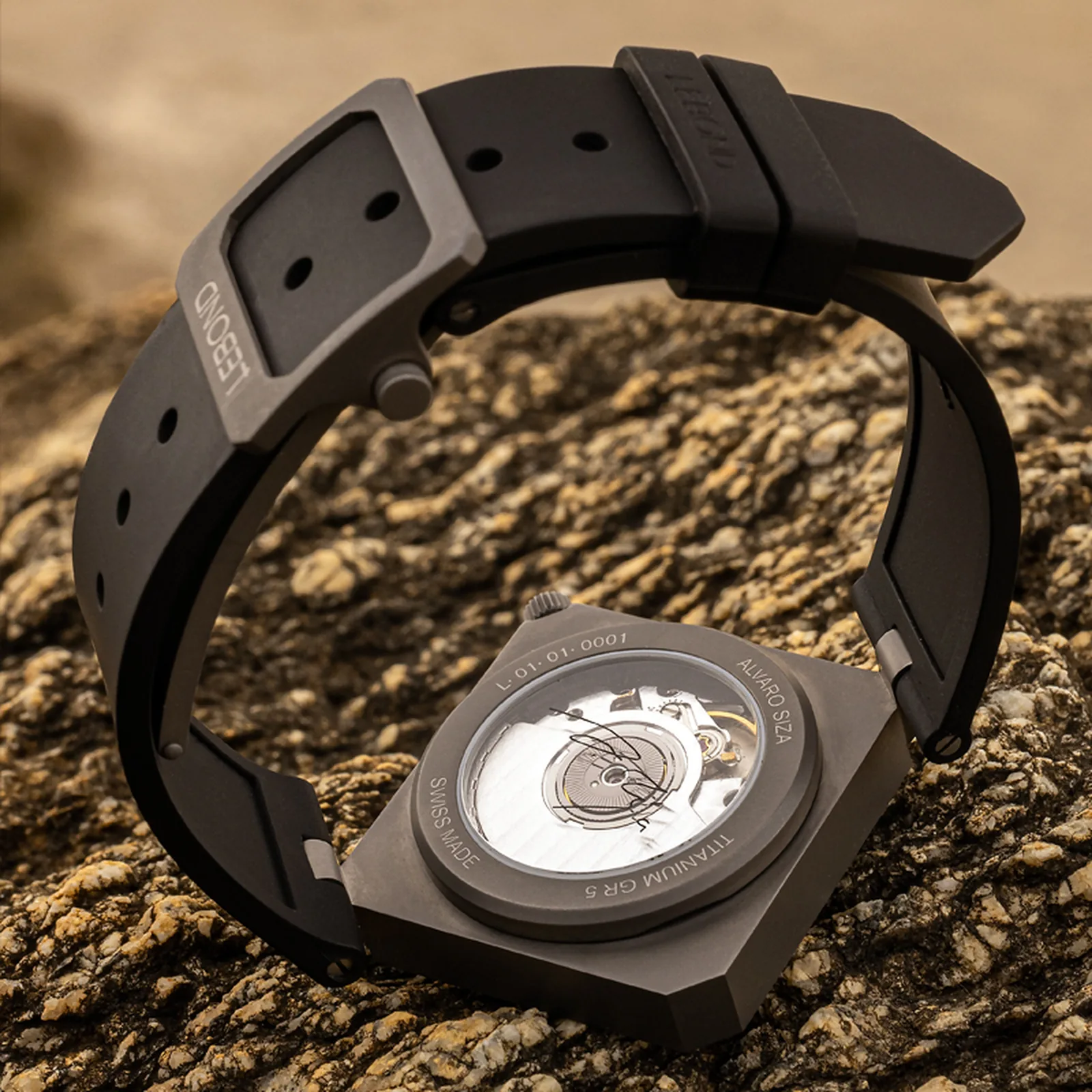

Leça swimming pools photography by Fernando Guerra. Sketches by Álvaro Siza. Lebond Siza by Lebond.
The Leça swimming pools by Álvaro Siza are one of modern architecture’s quietest masterpieces: a set of concrete tidal pools set into the rocky Atlantic shore of northern Portugal. Built early in Siza’s career, they show a young architect already refusing to impose on the landscape, choosing instead to work with the rock, the tide and the light.
The Leça swimming pools, or Piscinas de Marés, are an open-air seawater bathing complex designed by Álvaro Siza at Leça da Palmeira, near Porto, and built between 1961 and 1966. Rather than a building set on the beach, they are a sequence of low concrete walls that gather the sea into two pools, one for adults and one for children, using the existing rock formations as their other edges. The result feels less constructed than discovered, as if the pools had always been part of the coast. Seawater fills them at high tide, so the temperature and the level shift with the Atlantic rather than with a pump, tying the architecture to the rhythm of the sea itself.
Siza designed the pools to disappear into the shoreline rather than dominate it. The complex is entered from the coastal road above through a long concrete ramp that slides down between board-marked walls, hiding the sea until the last moment, then releasing it all at once. Changing rooms in raw concrete and dark timber sit low against the rock, their flat roofs never rising above the level of the road, so the horizon stays unbroken. Every move is about restraint: the concrete is left rough and honest, the palette is limited to grey, timber and water, and the geometry bends to meet the stone.
“Architects don’t invent anything; they transform reality,” Álvaro Siza has said of his approach.
The Leça pools announced the values that would define Siza’s whole career. Completed when he was still in his early thirties, they are a founding work of what critics later called critical regionalism, a modernism rooted in place, climate and material rather than in universal formulas. The processional descent, the framing of sea and sky, the refusal of ornament: all of it reappears, refined, in the buildings that earned Siza the Pritzker Prize in 1992. Portugal recognised the pools as a national monument, an unusual honour for a work of the twentieth century and a measure of how completely they belong to their coast.
The Leça pools belong to a stretch of coast Siza had already made his own. A short walk away stands the Boa Nova Tea House, the restaurant he designed between 1958 and 1963, its timber roofs folding down among the same rocks. Taken together, the two projects form a single early statement: architecture that reads the ground before it draws a line. Siza was born in nearby Matosinhos in 1933, and this shoreline was his first real laboratory, the place where he learned to let context set the terms. The lessons are practical as much as poetic. Salt, wind and Atlantic storms are hard on any structure, so the raw concrete and hardwoods were chosen to weather rather than resist, and a careful restoration in the 2000s renewed the pools without softening their original severity. What looks effortless was in fact precisely judged, which is exactly why it has lasted.
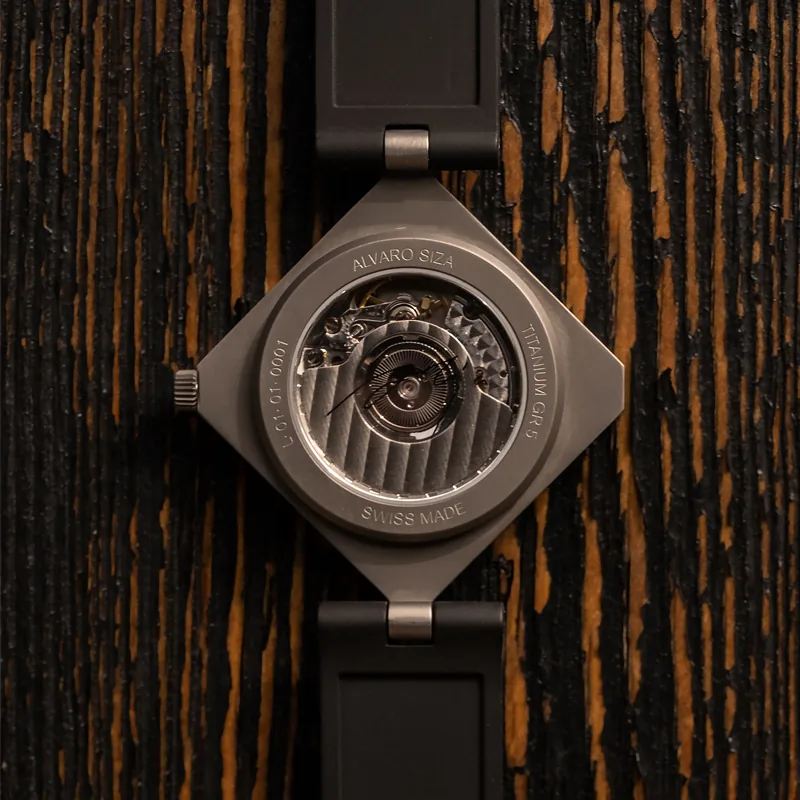
The same sensibility behind the Leça pools shapes the Lebond Siza. The watch is designed with Álvaro Siza himself, and it carries his lifelong lesson that the strongest design is the one that knows what to leave out. Where the pools reduce architecture to concrete, rock and water, the watch reduces horology to a titanium case and an unhurried, legible dial. To understand the object is to understand the man, which is why it helps to know the architects behind Lebond and to see the Siza alongside the rest of the Lebond watches.
The Leça swimming pools were designed by the Portuguese architect Álvaro Siza, winner of the 1992 Pritzker Prize. They were built at Leça da Palmeira, near Porto, between 1961 and 1966, early in his career.
The Leça swimming pools are at Leça da Palmeira, in the municipality of Matosinhos on the Atlantic coast just north of Porto, Portugal. They are also known by their Portuguese name, Piscinas de Marés, meaning tidal pools.
The Leça pools are important as an early masterpiece of critical regionalism, a modern architecture rooted in place and material. Siza set concrete pools into the natural rock and kept every structure below the road, letting the landscape lead. Portugal lists them as a national monument.
The Lebond Siza is a Swiss titanium watch designed with Álvaro Siza. Its reductive, legible design reflects the same restraint and respect for material that Siza brought to the Leça swimming pools.