

COMPLIMENTARY WORLDWIDE SHIPPING
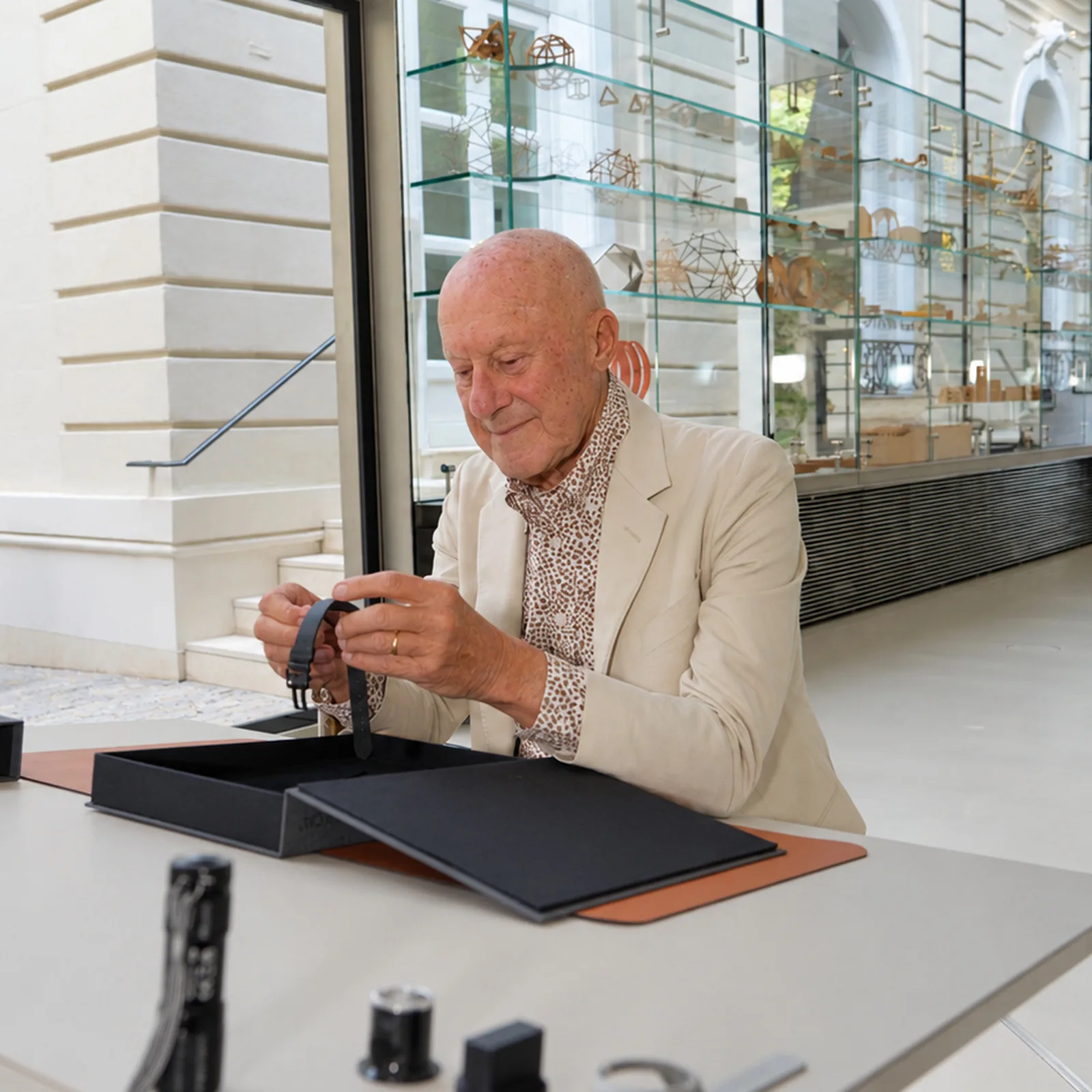
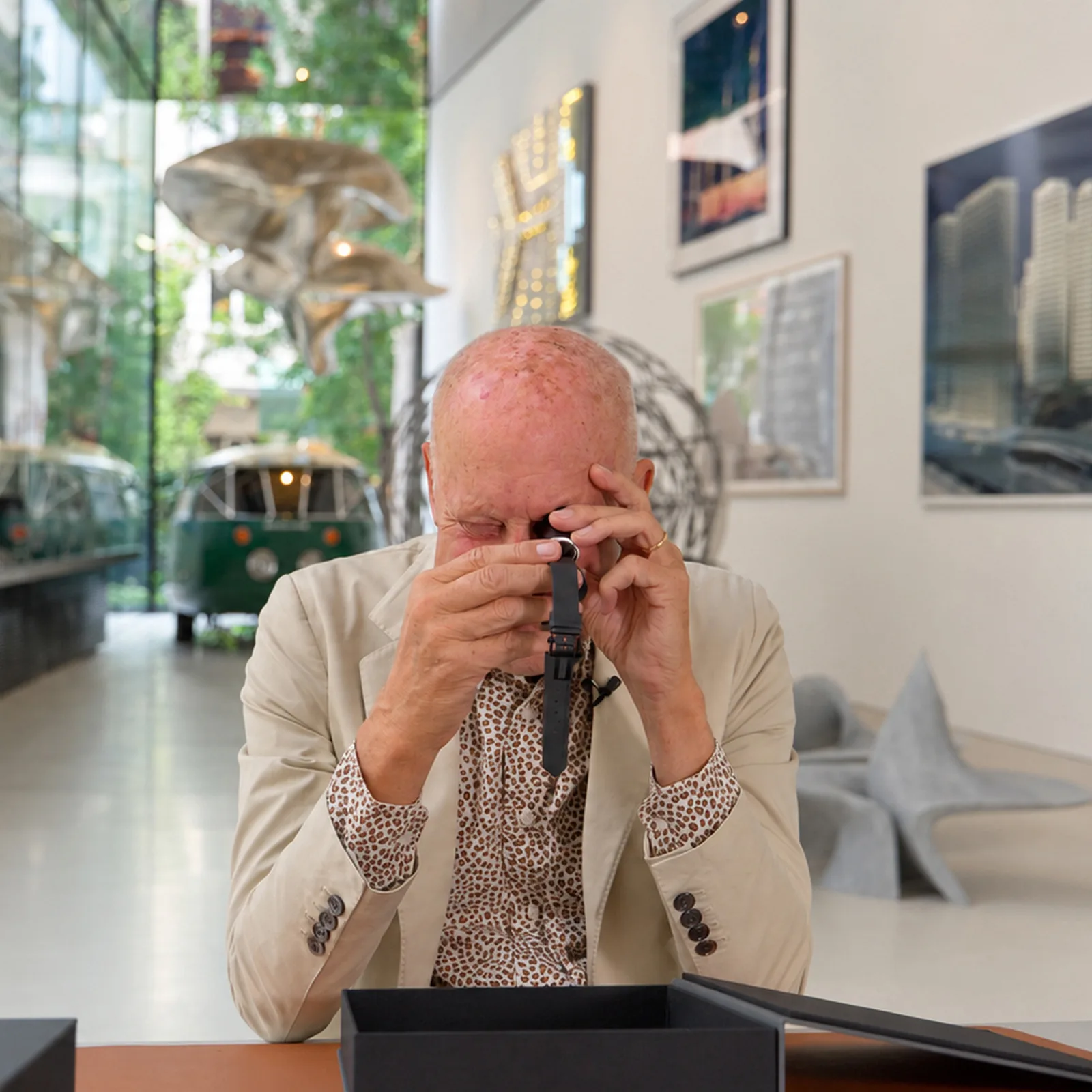
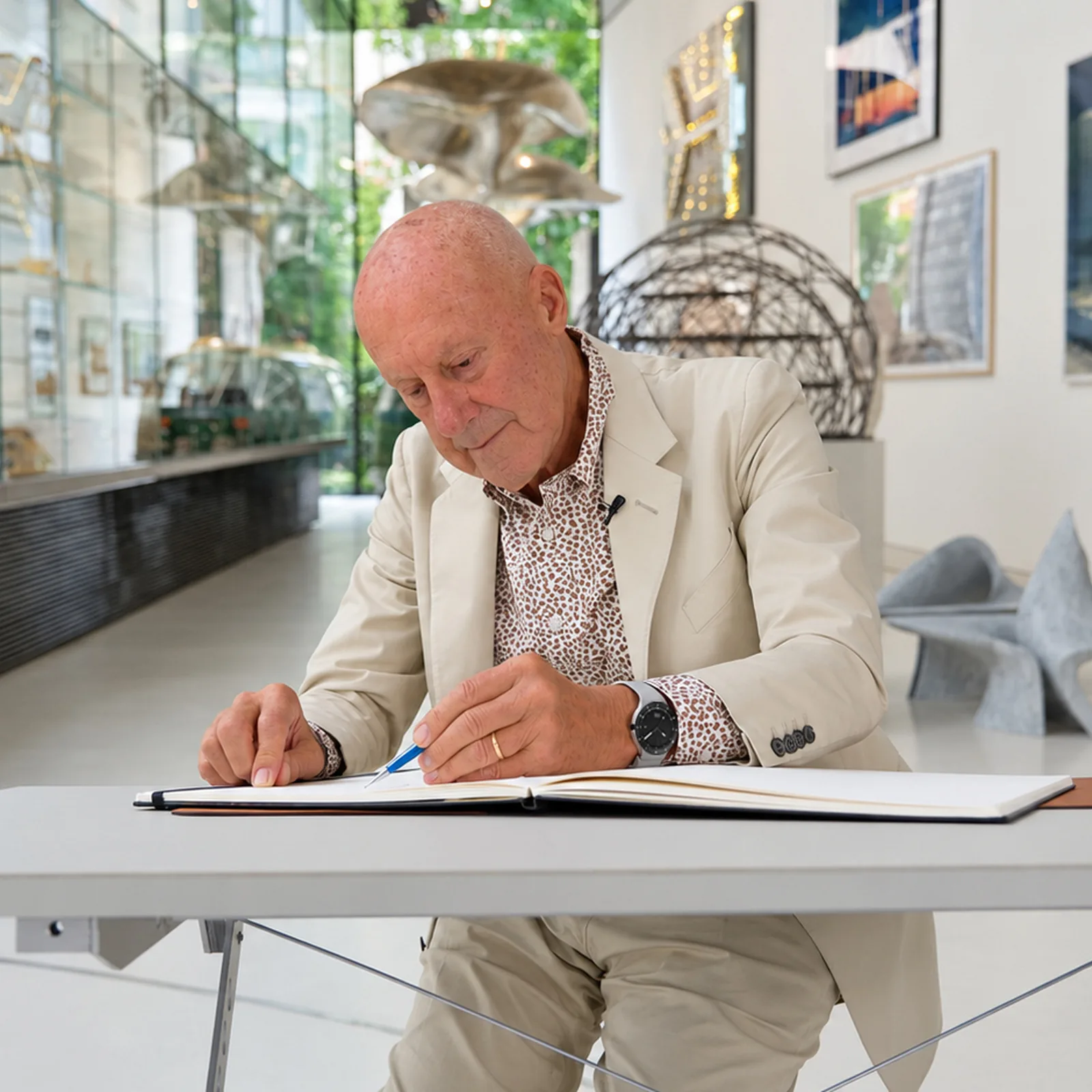
Photography by Lebond. Drawings by Norman Foster.
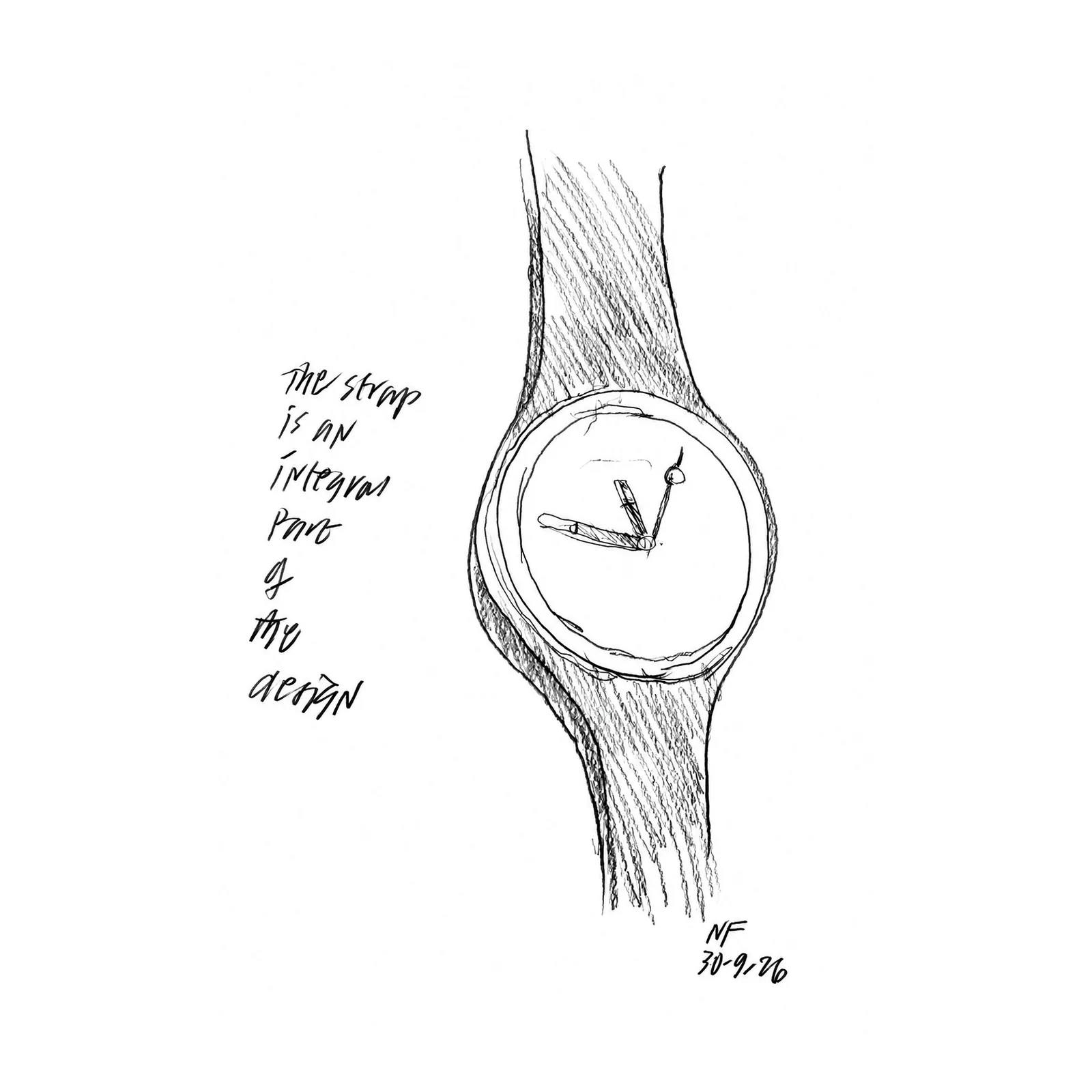
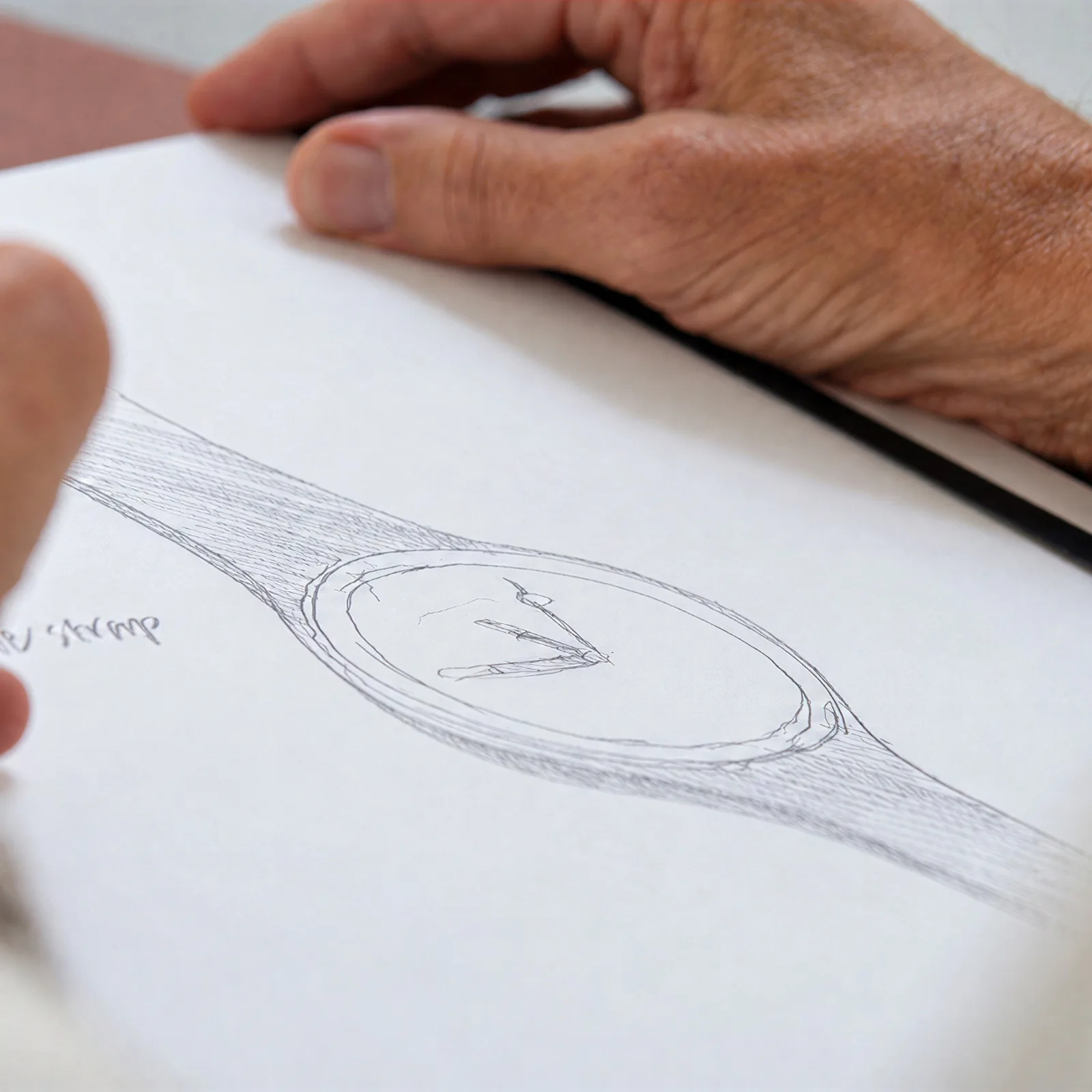
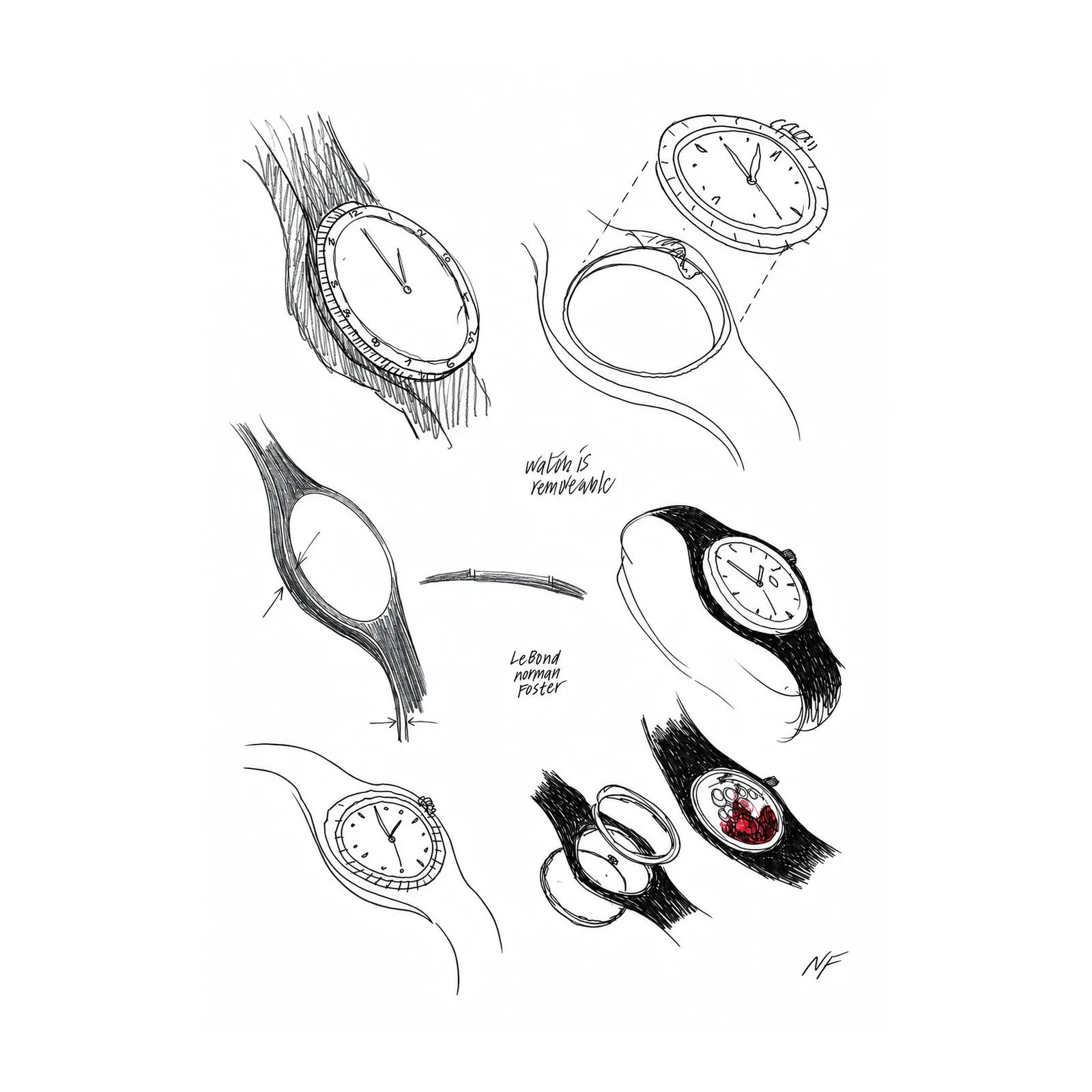
Norman Foster watch design begins where all of his work begins: with a pencil, a sketchbook and a question about how parts come together. Long before the Lebond Norman Foster existed as a prototype, it existed as a few lines in Foster’s hand, a round case flowing into its strap and a short note written beside it: the strap is an integral part of the design.
The idea behind the Lebond Norman Foster is that a watch should be designed as one continuous object, not as a case with a strap attached to it. Most watches are assembled from separate elements, a head, two lugs, two spring bars and a strap, each designed on its own. Foster, the 1999 Pritzker laureate, started from the connection between them. His conclusion was radical in its simplicity: remove the lugs, and let the strap become a continuation of the case.
It is the same thinking that has shaped his architecture for six decades. In the HSBC building in Hong Kong or the Reichstag dome in Berlin, structure, skin and use are resolved as a single system. At the scale of the wrist, that system is a ring of titanium held by a band of rubber that wraps around it.
“A watch is intensely personal. It is something that travels with you and becomes part of everyday life.” Norman Foster
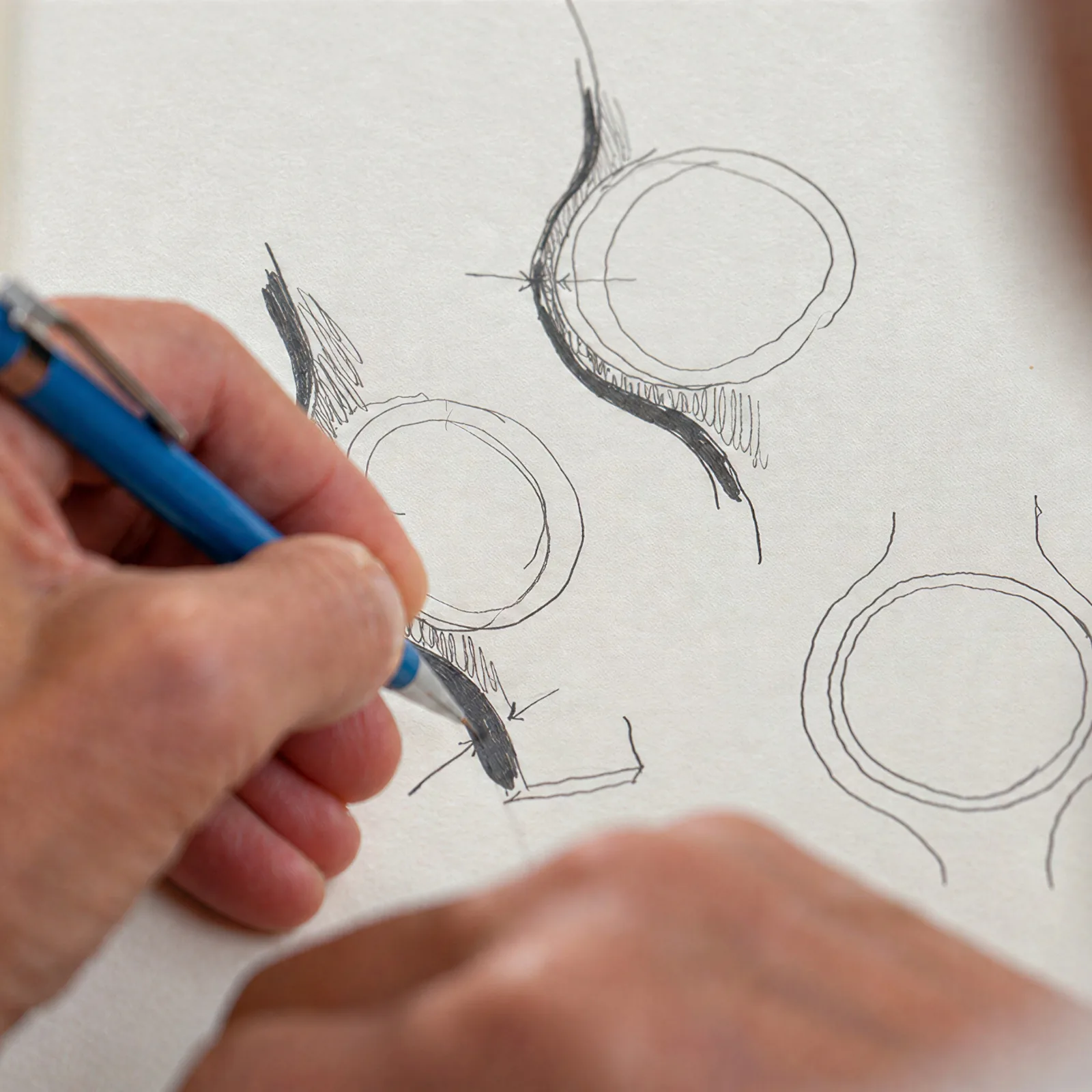
Foster thinks by drawing. Throughout his career he has filled sketchbooks with buildings, aircraft, cars and everyday objects, using the drawing not to illustrate an idea but to find it. The Lebond Norman Foster followed the same path. The first sketches are quick and searching: a dial, a pair of hands, and above all the outline of the strap swelling to embrace the case and narrowing again towards the wrist.
In the studies of the strap, arrows mark the points where the band meets the case, measuring the pressure and the thickness of the material. They are the drawings of an architect working out a junction, the same attention he would give to the meeting of a column and a beam.
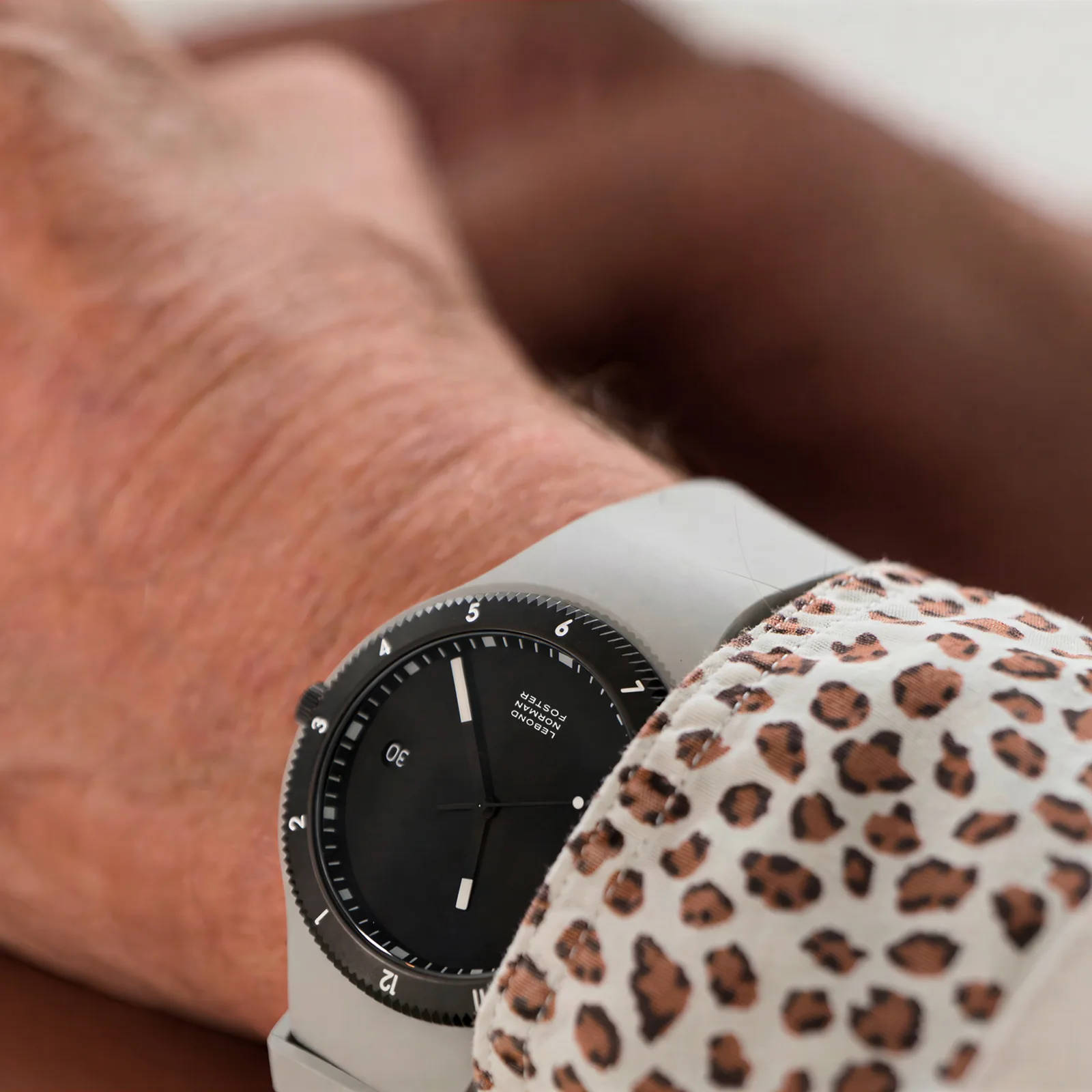
The lugless case is the defining gesture of Norman Foster’s watch design. Without the two projecting horns that normally hold the strap, the case reads as a pure circle and the strap as a single sweeping line. The two are conceived together, so the watch sits closer and lower on the wrist and the comfort comes from the form itself, not from an added detail.
The final case, in grade 5 titanium, measures 38.5 millimetres in diameter, widening to 40 millimetres where it meets the strap, and is 10 millimetres thick. It is a compact footprint with a clear architectural presence.
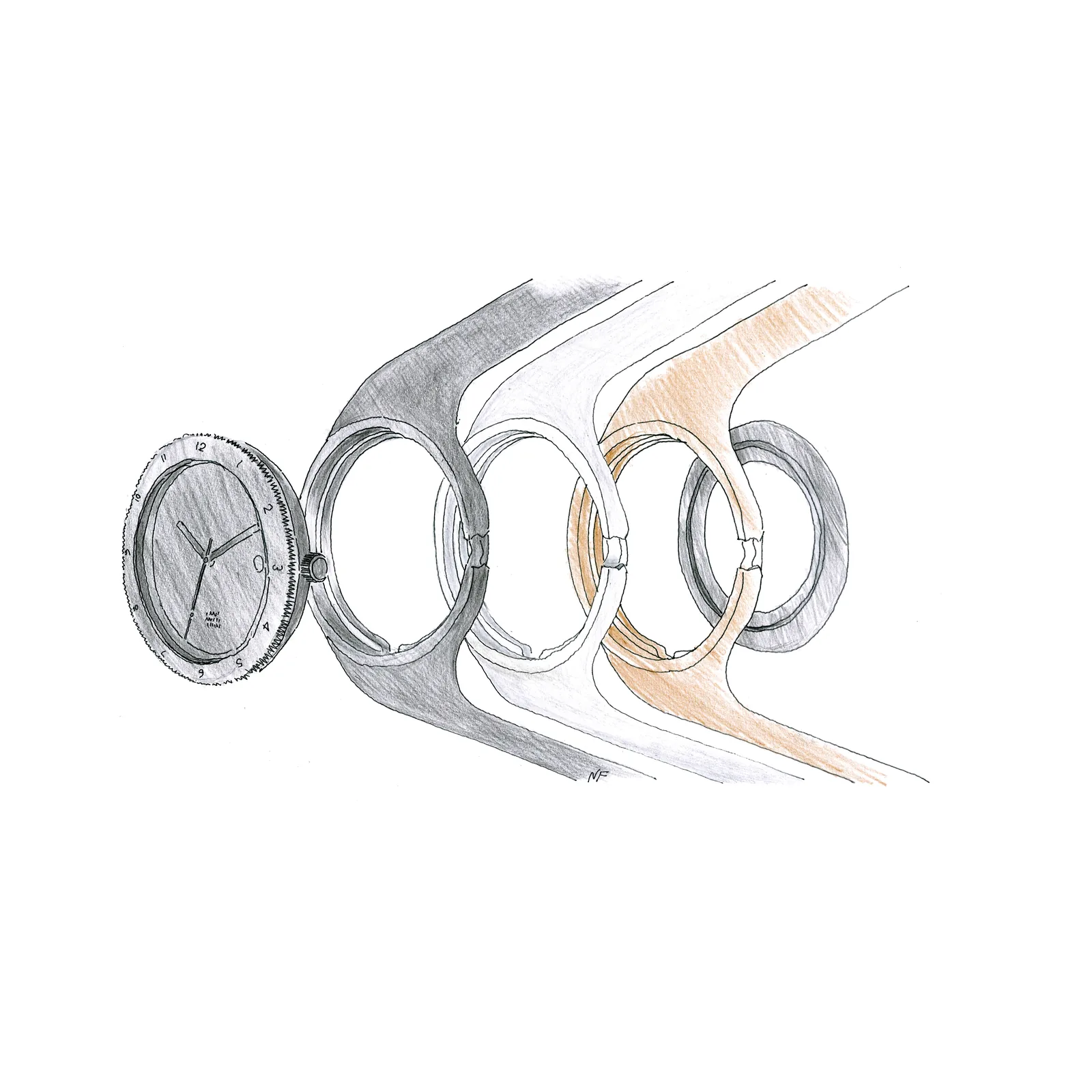
One of the sheets of sketches carries a second note in Foster’s hand: the watch is removable. Because the strap holds the case like a ring, the head of the watch can be lifted out and placed into another band. An exploded drawing makes the principle explicit, showing the watch head in front of a sequence of straps, each with its own colour, as if the layers of a building had been pulled apart to show how they fit.
That study became the interchangeable integrated strap system of the finished watch. It turns a single design into a family of possibilities, and it reflects a conviction that runs through Foster’s work: good design anticipates change.
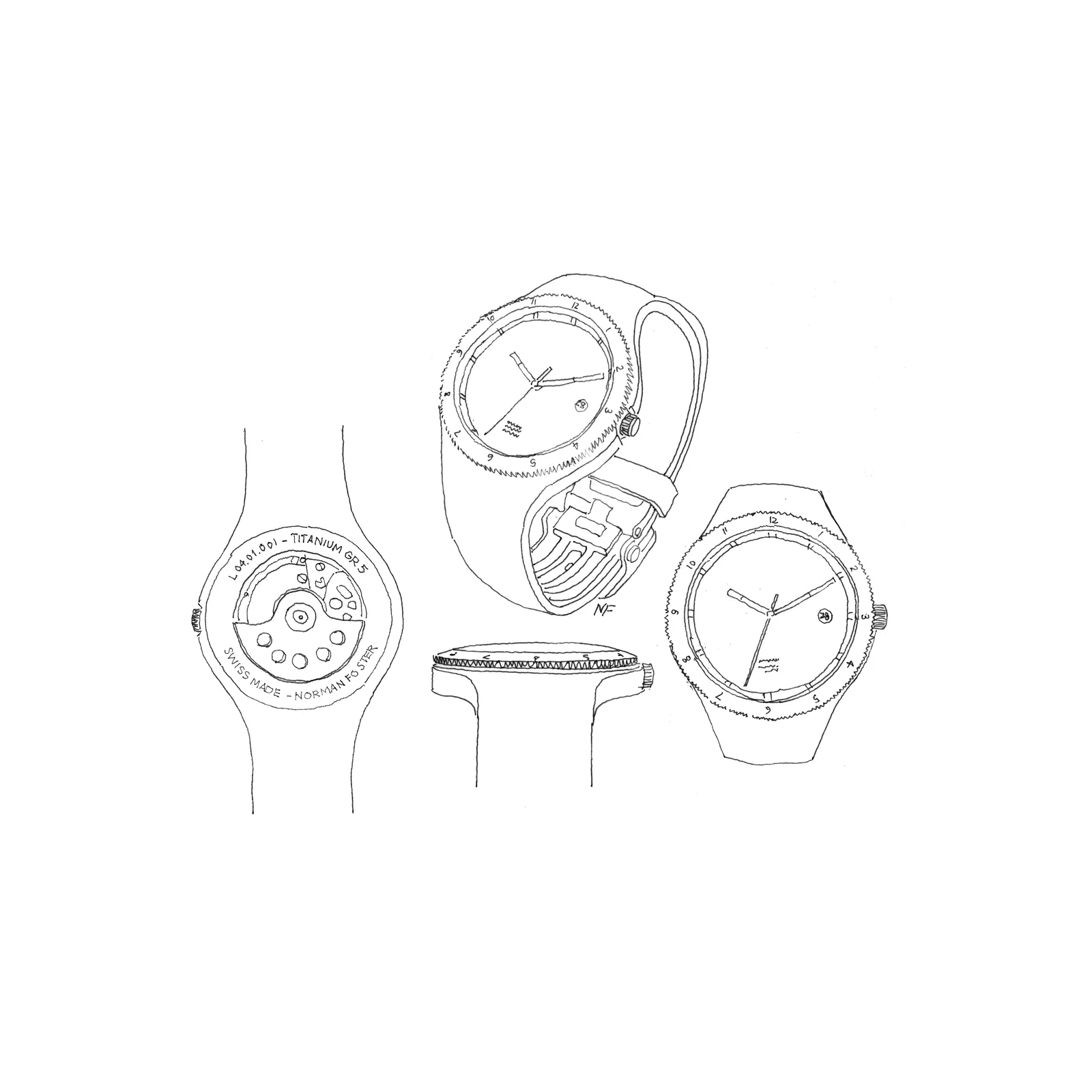
From the earliest sheets, Foster drew the back of the watch with as much care as the front. A rough sketch already shows a bright red rotor glimpsed through the caseback; a later line drawing defines the five perforations of the rotor and the inscription around it, Titanium Gr 5, Swiss Made, Norman Foster. In the finished watch, the perforated rotor turns above the Swiss automatic ETA 2892-A2, in red for the Black Edition and in blue for the Natural Titanium Edition.
“It expresses something I have always believed: engineering can also be beautiful when the way something works is made visible.” Norman Foster
It is the logic of Foster’s buildings, where masts, diagrids and service cores are not hidden but expressed. On the wrist, the mechanism becomes part of the watch’s identity rather than a secret behind a steel plate.
The design was developed with the Design & Innovation Unit of the Norman Foster Foundation, the studio within the Foundation that works across scales, from objects to installations and architecture. Together with Lebond, the team moved from sketches to technical drawings, from drawings to physical prototypes, and back again, refining the proportions of the case, the profile of the strap and the legibility of the dial at every step.
Several details came from Foster’s own life. A passionate pilot and a constant traveller, he wanted the watch to keep two time zones at a glance, so the final design includes a bidirectional rotating 12-hour bezel read against the main hour hand. Clear hands with Super-LumiNova and restrained typography keep the essential information readable by day and night.
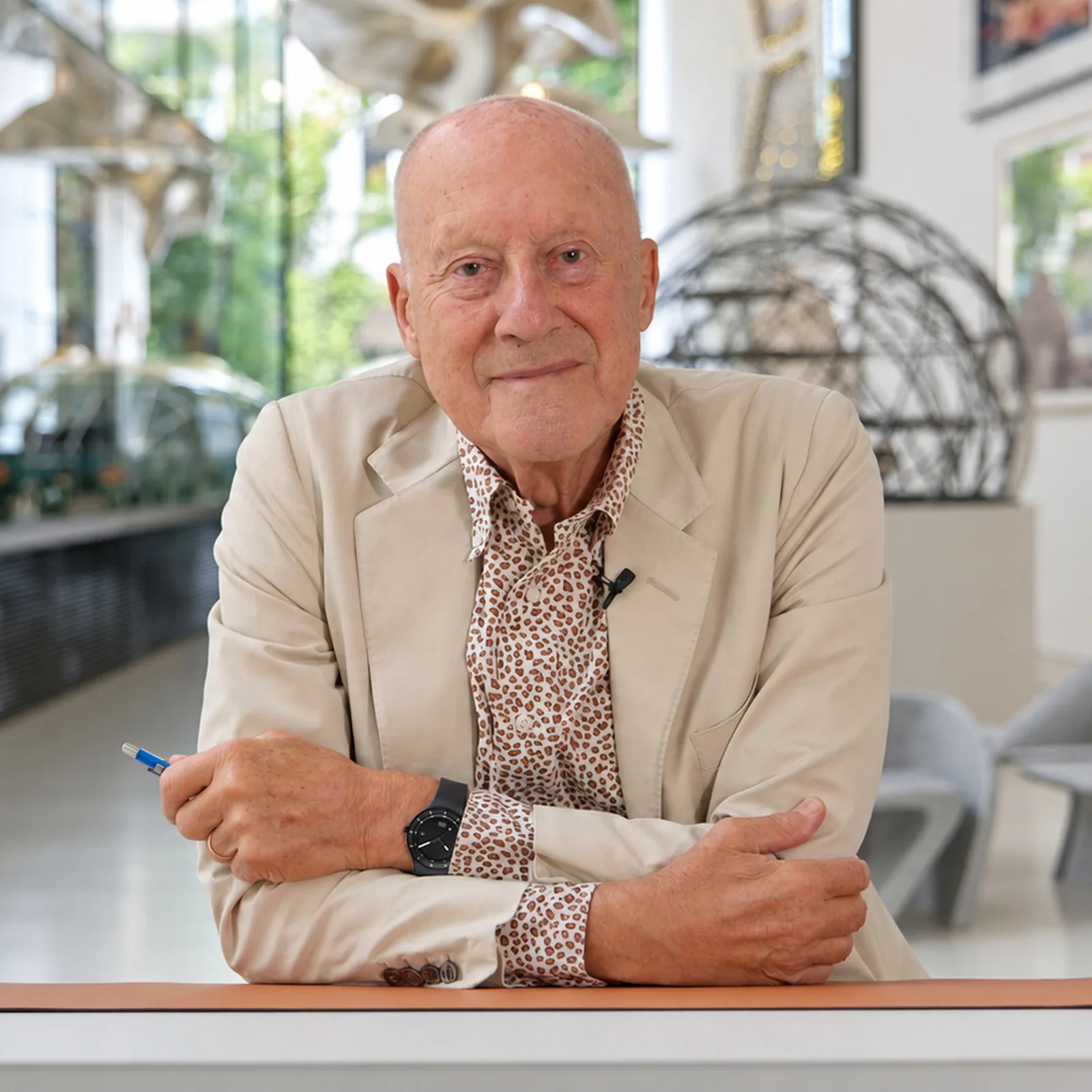
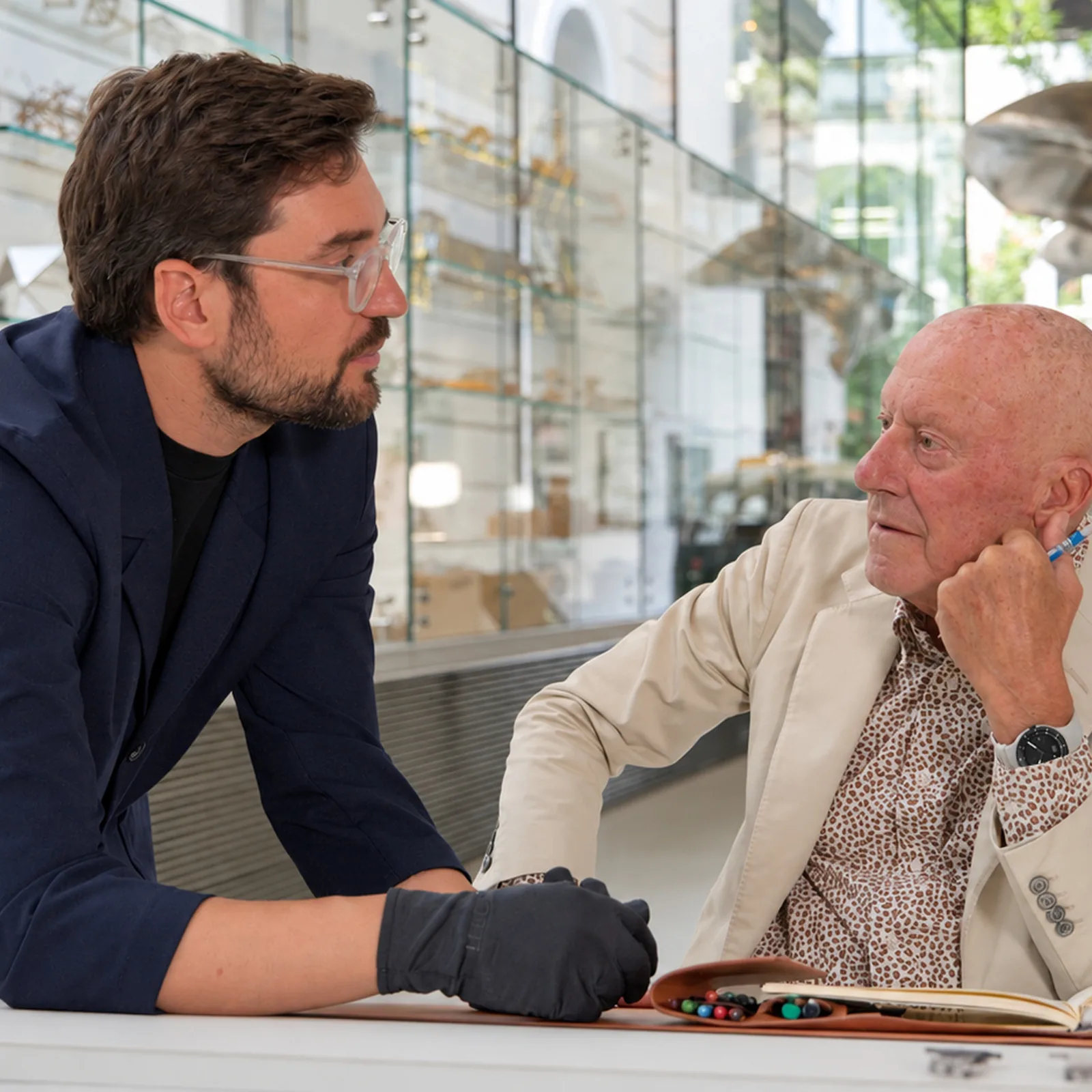
The final pieces were reviewed by Foster at the Norman Foster Foundation in Madrid, surrounded by the models and objects that fill its glass pavilion. He opened the presentation box, examined the case and the titanium deployant clasp, studied the dial and the movement through a loupe, and wore the watch. For an architect who has spent his career checking details on building sites around the world, the final inspection of a watch was a natural extension of the same habit.
“I hope it feels timeless rather than fashionable.” Norman Foster
The Lebond Norman Foster joins the work of the other architects who have designed for Lebond, including Álvaro Siza and Eduardo Souto de Moura. Each has brought a personal way of thinking to the wrist. Foster’s contribution is the idea that a watch, like a building, is defined by the way its parts are joined. To learn more about the man behind it, read our Norman Foster biography, or explore the full collection of architect-designed watches.
Both editions are available on the Lebond website: the Lebond Norman Foster Natural Titanium Edition and the Lebond Norman Foster Black Edition.
Yes. The watch was designed by Norman Foster with the Design & Innovation Unit of the Norman Foster Foundation, in collaboration with Lebond. The process began with Foster’s own hand sketches and moved through technical drawings and physical prototypes.
The watch has no conventional lugs. The strap is a direct continuation of the case, wrapping around it to form a single silhouette, and the watch head can be removed and placed into another strap thanks to an interchangeable integrated strap system.
Norman Foster is a pilot and a frequent traveller. The bidirectional rotating 12-hour bezel lets the wearer read a second time zone using the main hour hand.
Foster believes that engineering can be beautiful when the way something works is made visible. The perforated rotor, red on the Black Edition and blue on the Natural Titanium Edition, turns behind a sapphire caseback as part of the watch’s identity.
The finished watch was reviewed and photographed with Norman Foster at the Norman Foster Foundation in Madrid.